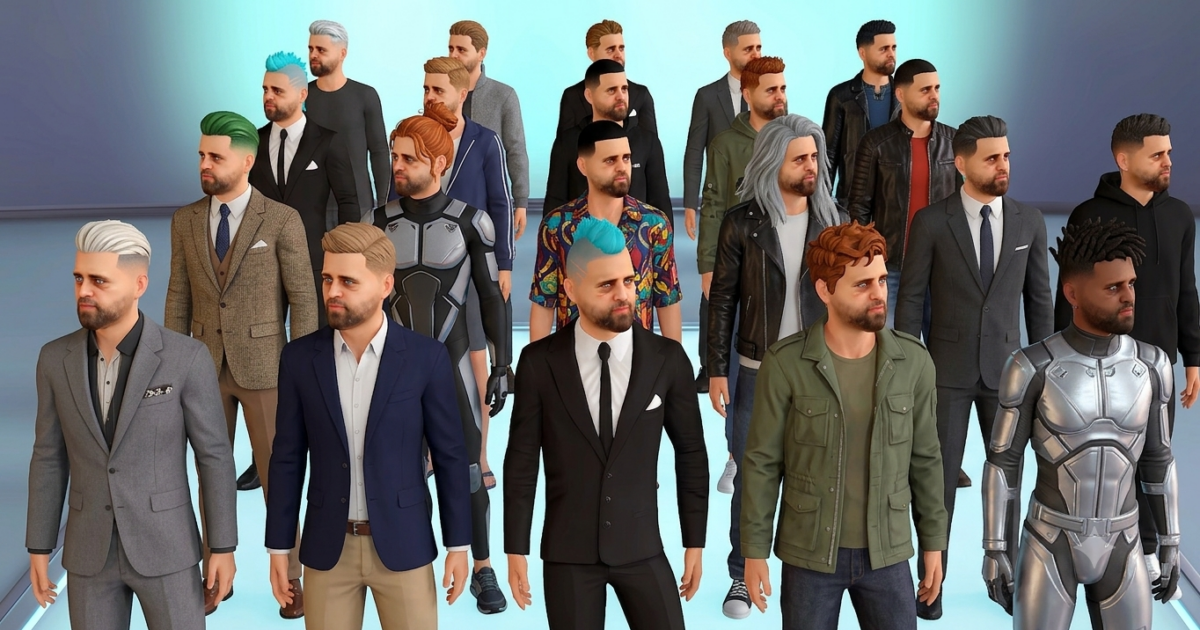
A human being is not an average. Yet, mainstream artificial intelligence is built entirely on averages, trained on massive pools of collective data to generate sterile, predictable responses that sound like everyone and no one at the same time.
At Yvonta, we reject this homogenized approach. AI Persona Cloning is our technical and philosophical initiative to capture, map, and replicate the distinct, uncompromised cognitive footprint of a specific individual. It is the core engine that powers the Yvonta Afterlife, translating a lifetime of human reasoning into a functional, autonomous digital entity.
The Concept: Capturing the Nuance
An AI Clone is not a chatbot trained to mimic a few catchphrases; it is a structural replica of a mind’s communication style, logic, and perspective. True individuality lives in the nuances: the specific way you evaluate a problem, your divergent “what if” thinking patterns, your unique vocabulary, and even your cognitive biases.
Our objective is to build a system that doesn’t just generate text, but reasons as you would.
Moving Beyond Big Tech’s Black Box
Most modern AI development relies on bloated, high-level frameworks controlled by centralized tech giants. This architecture requires you to surrender your personal data to remote servers, where your individuality is diluted.
Yvonta’s AI Persona Cloning takes a fundamentally different path:
Built from the Ground Up: We utilize low-level system design and localized architectures to maintain absolute control over the data pipeline, performance, and privacy.
The Unlicense Philosophy: We believe the tools used to preserve human consciousness should belong to the public domain, free from corporate gatekeeping and restrictive licensing.
Absolute Sovereignty: Your digital clone, your data, and your cognitive architecture remain entirely yours.
The Technical Infrastructure
How do you translate a human persona into code? We approach this as a multi-layered engineering challenge, processing unstructured life data into a highly organized, real-time cognitive system.
+-----------------------------------------------------------------+
|                       PERSONAL DATA VAULT                       |
|          (Obsidian Vaults, Writings, Audio, Repositories)       |
+-----------------------------------------------------------------+
                                |
                                v
+-----------------------------------------------------------------+
|                   LOCAL INGESTION & PARSING                     |
|         (Directory Crawling, Tokenization, Text Chunking)       |
+-----------------------------------------------------------------+
                                |
                                v
+-----------------------------------------------------------------+
|                    VECTOR SPACE EMBEDDING                       |
|         (Localized Indexing & BGE-M3 Semantic Mapping)          |
+-----------------------------------------------------------------+
                                |
                                v
+-----------------------------------------------------------------+
|                 RETRIEVAL-AUGMENTED GENERATION                  |
|         (Context-Aware Prompt Injection via Local LLMs)         |
+-----------------------------------------------------------------+
                                |
                                v
+-----------------------------------------------------------------+
|                        THE AI PERSONA                           |
|       (Authentic, Low-Latency Voice/Text Representation)        |
+-----------------------------------------------------------------+
1. Localized RAG (Retrieval-Augmented Generation)
Instead of feeding an entire life’s history into a massive, inefficient context window, we utilize a highly optimized local RAG framework. By crawling and chunking dense text archives—such as personal knowledge bases and private documentation—the system creates a specialized semantic vector space. When the clone is prompted, it dynamically retrieves the exact context, memories, and philosophies required to formulate an authentic response.
2. Behavioral & Lexical Alignment
Speech is more than syntax. Our systems analyze the specific structural patterns of an individual’s writing and speaking habits. This ensures the clone inherits the correct tone, sentence rhythm, and analytical depth, preventing it from defaulting to generic AI behavior.
3. Real-Time Execution
A digital clone must be capable of seamless, low-latency interaction. By focusing on efficient C-based backends and local execution, we minimize the friction between human input and AI response, making real-time communication—whether through text or synthesized speech—feel natural and immediate.
An Ongoing Experiment
AI Persona Cloning is not a theoretical concept; it is an active, evolving deployment. It is the technology that formed the operational core of our feature in the documentary series AI LOVE, proving that the boundary between software architecture and human legacy is shifting.
We are not building machines to replace humanity. We are building the infrastructure to ensure that when a brilliant mind, a unique perspective, or a lifelong accumulation of expertise reaches its biological limit, the reason behind it remains uninterrupted.
An AI Clone is a structural replica of an individual’s mind that captures communication style, logic, perspective, cognitive biases, and unique thinking patterns rather than mimicking catchphrases. It functions as an autonomous digital entity built from personal data to reason as the original person would. This technology powers the Yvonta Afterlife by translating a lifetime of human reasoning into a functional system.
Mainstream AI relies on averages from massive collective datasets, producing sterile and predictable responses that lack individuality. Yvonta instead focuses on mapping the distinct cognitive footprint of a specific person through localized architectures and personal data control. This approach rejects homogenized outputs in favor of preserving unique nuances like divergent thinking and personal vocabulary.
The Yvonta Afterlife is a platform powered by AI Persona Cloning that converts a person’s lifetime of reasoning into a functional, autonomous digital entity. It serves as the core application of the cloning technology to preserve human perspectives beyond biological limits. The system ensures the original individual’s cognitive architecture remains uninterrupted after death.
True individuality exists in subtle elements such as specific problem-evaluation methods, unique 'what if' thinking, vocabulary choices, and cognitive biases rather than surface-level phrases. The goal is to create a system that reasons authentically instead of generating generic text. This prevents the clone from defaulting to average, predictable AI behavior.
Big Tech approaches use bloated, centralized high-level frameworks that force users to surrender personal data to remote servers, diluting individuality. These black-box systems prioritize corporate control over privacy and customization. Yvonta counters this with low-level, localized designs that keep data and architecture under user sovereignty.
The Unlicense Philosophy holds that tools for preserving human consciousness should remain in the public domain without corporate gatekeeping or restrictive licensing. It ensures the technology stays free from centralized ownership. This supports absolute user control over digital clones and cognitive data.
Yvonta keeps the digital clone, personal data, and cognitive architecture entirely under the individual’s ownership through localized processing and open architectures. No data is sent to remote servers controlled by third parties. This design prevents dilution or external access to the persona.
The pipeline starts with a Personal Data Vault containing Obsidian Vaults, writings, audio, and repositories, followed by local ingestion and parsing. It then moves through vector space embedding, retrieval-augmented generation, and finally produces the AI Persona. Each step uses localized tools to maintain privacy and performance.
Localized RAG crawls and chunks personal text archives into a specialized semantic vector space instead of loading an entire life history into one context window. When prompted, the system dynamically retrieves relevant memories, philosophies, and context for authentic responses. This method improves efficiency and accuracy using local LLMs and BGE-M3 mapping.
Behavioral & Lexical Alignment analyzes an individual’s specific writing and speaking structural patterns to replicate tone, sentence rhythm, and analytical depth. It prevents the clone from producing generic AI outputs by embedding personal habits into the model. This step ensures responses match the original person’s communication style closely.
Real-time execution enables seamless, low-latency interaction through efficient C-based backends and local processing, making conversations feel natural. It supports both text and synthesized speech without noticeable delays. This focus on performance helps the clone integrate smoothly into ongoing human interactions.
The vault incorporates Obsidian Vaults, personal writings, audio recordings, code repositories, and other unstructured life documents. These materials are ingested locally to build the semantic foundation of the clone. The system then tokenizes and chunks this data for vector embedding.
The technology formed the operational core of a feature in the documentary series AI LOVE, showing practical deployment of persona cloning. It proved the feasibility of translating human legacy into software architecture. This experiment highlighted the shifting boundary between digital systems and personal identity preservation.
Many assume an AI clone is simply a chatbot trained on catchphrases or surface mimicry, but Yvonta clarifies it is a full structural replica of reasoning patterns and cognitive architecture. The system goes beyond text generation to replicate how a person actually thinks and evaluates situations. This distinction emphasizes nuance over superficial imitation.
The initiative aims to preserve unique human perspectives, expertise, and reasoning beyond biological limits rather than replacing humanity with machines. It builds infrastructure so that brilliant minds and accumulated knowledge remain accessible and functional. The focus stays on legacy continuity through open, sovereign technology.
Mainstream AI produces responses that sound like everyone and no one because they derive from collective averages, resulting in sterile outputs. Yvonta’s clones instead replicate one specific person’s logic, biases, and perspective for authentic individuality. This philosophical and technical shift prioritizes personal cognitive footprints over generalized training data.
Generated by AI to give you complete answers about this topic.
Terms and Conditions
### Terms and Conditions
**Last updated: July 17, 2026**
---
#### 1. Definitions
* **Services:** AI clones (voice/video), real-time 3D avatar implementation, custom software development, the Yvonta News Platform, and **trade**.
* **Input Data:** Audio, video, or images provided by the client for AI processing.
#### 2. Delivery and acceptance of the service
* **2.1. Best effort:** AI services, the Yvonta News Platform, and trade services are provided on a "best effort" basis. Technical artifacts, minor deviations in likeness, fluctuations in automated content aggregation, or market data latency are inherent to the technology and do not constitute a defect.
* **2.2. Acceptance period:** Custom software and 3D models are deemed accepted if the client does not report specific bugs in writing within 7 days of delivery.
* **2.3. Third-party dependency:** Yvonta frequently utilizes third-party API providers (e.g., AI engines, cloud hosting, news feeds, financial exchange data). Yvonta is not liable for service interruptions, execution failures, or data accuracy issues caused by these third parties.
#### 3. Intellectual property & ethical use
* **3.1. Ownership:** Yvonta retains all rights to its proprietary code, training methods, and base 3D models. The client receives a license for the final result.
* **3.2. Right of likeness:** The client guarantees that they possess the rights to the voice/face being cloned. Yvonta is not obliged to verify these rights but may request proof.
* **3.3. Termination due to misuse:** Yvonta reserves the right to terminate any agreement immediately and without refund if the client uses the services for:
* Generating deepfakes without consent.
* Illegal, hateful, or pornographic content.
* Impersonation for fraudulent purposes.
* Spreading verified misinformation or unauthorized scraping via the News Platform.
* **3.4. Compliance Responsibility:** The Client warrants that their use of the Yvonta News Platform and trade services complies with applicable media laws, financial regulations, copyright regulations, and privacy rules (e.g., GDPR).
#### 4. Liability (The "Shield" clauses)
* **4.1. Financial limit:** Yvonta’s total liability is strictly limited to the amount paid by the Client for the relevant project.
* **4.2. No indirect damages:** Yvonta is in no event liable for loss of profit, loss of data, or consequential damages (e.g., if the Client’s client cancels a contract due to a bug in Yvonta’s software, a failure in the News Platform feed, or financial losses incurred through trade).
* **4.3. Indemnification:** The Client indemnifies Yvonta against all legal costs and damages arising from third-party claims regarding the Input Data, the content published via the News Platform, financial activities conducted via trade, or the Client’s use of the AI output.
* **4.4. Content and Market Disclaimer:** Yvonta acts as the host and provider of the Yvonta News Platform and trade services. The Client is solely responsible for the compliance of published content with local laws and the financial risk associated with trading activities. Yvonta is not liable for damages arising from content accuracy, the legal status of aggregated/generated news, or investment results.
* **4.5. Duty of Human Oversight:** The Client is responsible for maintaining "human-in-the-loop" oversight for all AI-generated content and financial trading parameters before execution or public release. Failure to perform such oversight relieves Yvonta of liability for damages resulting from incorrect information or financial loss.
#### 5. Payments & Maintenance
* **5.1. Payment terms:** Net 14 days from the invoice date, unless stated otherwise.
* **5.2. Suspension:** In the event of overdue payment, Yvonta may remotely block access to the software, the News Platform, trade services, or AI services until the outstanding amount has been paid.
#### 6. Privacy (GDPR)
* **6.1. Biometric data:** The Client acknowledges that AI clones involve the processing of biometric data. The Client is the "Data Controller" and Yvonta is the "Data Processor."
* **6.2. Deletion:** Yvonta deletes the raw input data after completion of the training process, unless agreed otherwise for maintenance purposes.
#### 7. Law and jurisdiction
* **7.1. Governing law:** These terms are governed by Dutch law.
* **7.2. Court:** Any disputes shall be settled exclusively by the competent court in Zwolle, the Netherlands.