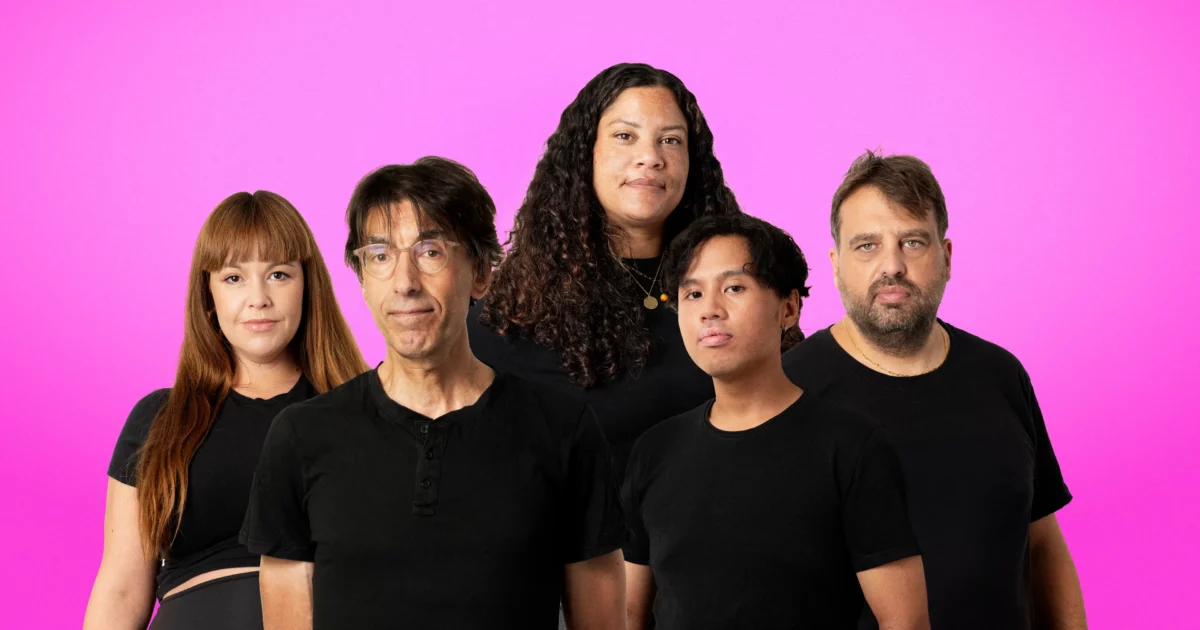
Our contribution to the documentary series ‘AI LOVE’
Technology is never neutral. It is a mirror reflecting how we, as a society, view ourselves. When the creators of the documentary series AI LOVE approached me, I saw an opportunity to shift the conversation around AI away from sterile efficiency and science-fiction clichés. In the series, I am featured as a systems architect and the thinker driving the preservation of human memory and expertise through digital conservation.
At Yvonta, we build systems designed to carry the essence of a personality. The goal is not to replace human connection, but to build a bridge to the future, a digital afterlife. AI LOVE took this abstract, technical process and made it tangible for a broader audience.
The Friction Between Logic and Emotion
What the documentary captured with sharp accuracy is the exact intersection where rigid software architecture collides with raw human emotion. On one side is the logic: building code, data structures, and algorithms from scratch to map patterns of thought and speech. On the other side, this work directly confronts our deepest vulnerabilities: our mortality and the profound need to maintain continuity with those we love.
Developing an AI persona clone is not just a technical challenge. It is an ethical and philosophical exploration. How do we capture the nuances of human reasoning within a digital framework without losing its inherent character?
A Different Perspective on Digital Legacy
My involvement in AI LOVE was not an end in itself, but a catalyst to challenge current social perspectives. We need to look beyond the standard, centralized architectures dictated by big tech. We must begin viewing digital inheritance as a right, a form of restorative value for those left behind, and a method to safeguard accumulated human expertise from the erosion of time.
The series demonstrated that the systems being developed behind the scenes have the potential to fundamentally alter how we grieve, remember, and communicate. It remains an ongoing experiment, and the documentary provided an honest, unfiltered look into that reality.
The author is featured as a systems architect and thinker focused on preserving human memory and expertise through digital conservation. Their involvement highlights building AI systems that carry the essence of a personality at Yvonta.
The author represents Yvonta, where they develop systems for digital conservation of human essence and expertise.
The systems aim to preserve the essence of a personality and create a digital afterlife that bridges to the future without replacing human connection.
Technology acts as a mirror reflecting societal self-perception, and the author uses this view to shift AI discussions away from efficiency clichés toward deeper human themes.
It shows the collision of rigid software architecture, code, and algorithms with raw human emotions around mortality and the need for continuity with loved ones.
No, it is also an ethical and philosophical exploration of capturing human reasoning nuances in digital frameworks without losing inherent character.
They provided a chance to shift conversations around AI from sterile efficiency and science-fiction tropes to preserving human memory and expertise.
The systems could fundamentally alter how people grieve, remember, and communicate, serving as an ongoing experiment in digital legacy.
It challenges centralized architectures from big tech and promotes viewing digital inheritance as a right and a way to safeguard human expertise from time's erosion.
AI LOVE made the abstract technical process of building digital afterlives and personality preservation understandable to a broader audience.
No, the explicit goal is to build a bridge to the future rather than replace human connection.
It requires examining how to map patterns of thought and speech digitally while addressing vulnerabilities like mortality and loss.
It is presented as a right, a form of restorative value for those left behind, and a safeguard for accumulated human expertise.
An honest, unfiltered look into an ongoing experiment that accurately captures the intersection of software logic and human emotion.
It confronts human mortality and the profound need to maintain continuity with loved ones through digital means.
It serves as a catalyst to challenge current social perspectives on AI, digital legacy, and moving beyond big tech's centralized models.
Generated by AI to give you complete answers about this topic.
Terms and Conditions
### Terms and Conditions
**Last updated: July 17, 2026**
---
#### 1. Definitions
* **Services:** AI clones (voice/video), real-time 3D avatar implementation, custom software development, the Yvonta News Platform, and **trade**.
* **Input Data:** Audio, video, or images provided by the client for AI processing.
#### 2. Delivery and acceptance of the service
* **2.1. Best effort:** AI services, the Yvonta News Platform, and trade services are provided on a "best effort" basis. Technical artifacts, minor deviations in likeness, fluctuations in automated content aggregation, or market data latency are inherent to the technology and do not constitute a defect.
* **2.2. Acceptance period:** Custom software and 3D models are deemed accepted if the client does not report specific bugs in writing within 7 days of delivery.
* **2.3. Third-party dependency:** Yvonta frequently utilizes third-party API providers (e.g., AI engines, cloud hosting, news feeds, financial exchange data). Yvonta is not liable for service interruptions, execution failures, or data accuracy issues caused by these third parties.
#### 3. Intellectual property & ethical use
* **3.1. Ownership:** Yvonta retains all rights to its proprietary code, training methods, and base 3D models. The client receives a license for the final result.
* **3.2. Right of likeness:** The client guarantees that they possess the rights to the voice/face being cloned. Yvonta is not obliged to verify these rights but may request proof.
* **3.3. Termination due to misuse:** Yvonta reserves the right to terminate any agreement immediately and without refund if the client uses the services for:
* Generating deepfakes without consent.
* Illegal, hateful, or pornographic content.
* Impersonation for fraudulent purposes.
* Spreading verified misinformation or unauthorized scraping via the News Platform.
* **3.4. Compliance Responsibility:** The Client warrants that their use of the Yvonta News Platform and trade services complies with applicable media laws, financial regulations, copyright regulations, and privacy rules (e.g., GDPR).
#### 4. Liability (The "Shield" clauses)
* **4.1. Financial limit:** Yvonta’s total liability is strictly limited to the amount paid by the Client for the relevant project.
* **4.2. No indirect damages:** Yvonta is in no event liable for loss of profit, loss of data, or consequential damages (e.g., if the Client’s client cancels a contract due to a bug in Yvonta’s software, a failure in the News Platform feed, or financial losses incurred through trade).
* **4.3. Indemnification:** The Client indemnifies Yvonta against all legal costs and damages arising from third-party claims regarding the Input Data, the content published via the News Platform, financial activities conducted via trade, or the Client’s use of the AI output.
* **4.4. Content and Market Disclaimer:** Yvonta acts as the host and provider of the Yvonta News Platform and trade services. The Client is solely responsible for the compliance of published content with local laws and the financial risk associated with trading activities. Yvonta is not liable for damages arising from content accuracy, the legal status of aggregated/generated news, or investment results.
* **4.5. Duty of Human Oversight:** The Client is responsible for maintaining "human-in-the-loop" oversight for all AI-generated content and financial trading parameters before execution or public release. Failure to perform such oversight relieves Yvonta of liability for damages resulting from incorrect information or financial loss.
#### 5. Payments & Maintenance
* **5.1. Payment terms:** Net 14 days from the invoice date, unless stated otherwise.
* **5.2. Suspension:** In the event of overdue payment, Yvonta may remotely block access to the software, the News Platform, trade services, or AI services until the outstanding amount has been paid.
#### 6. Privacy (GDPR)
* **6.1. Biometric data:** The Client acknowledges that AI clones involve the processing of biometric data. The Client is the "Data Controller" and Yvonta is the "Data Processor."
* **6.2. Deletion:** Yvonta deletes the raw input data after completion of the training process, unless agreed otherwise for maintenance purposes.
#### 7. Law and jurisdiction
* **7.1. Governing law:** These terms are governed by Dutch law.
* **7.2. Court:** Any disputes shall be settled exclusively by the competent court in Zwolle, the Netherlands.