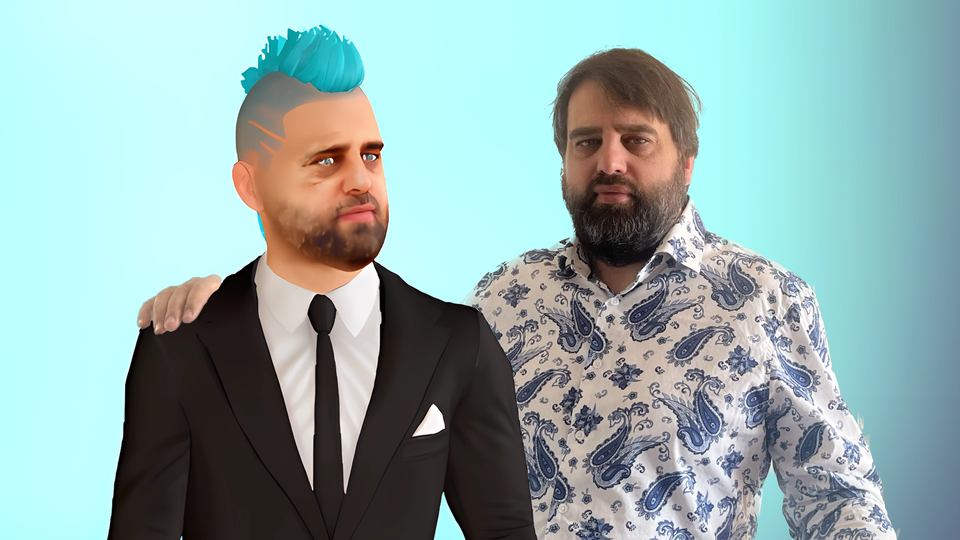
The ultimate limitation of human existence is not a lack of intent, but the hard boundary of time. When a mind ceases to function, a vast repository of accumulated expertise, unique reasoning patterns, and personal history disappears with it.
Yvonta Afterlife is an architectural and philosophical framework designed to break this absolute boundary. It is a digital ecosystem built to capture, preserve, and continue the essence of a human persona, transforming a static legacy into an active, reasoning entity capable of continuous engagement with the future.
Continuity, Not Replacement Philosophy
We do not look at AI persona cloning through the lens of mainstream science fiction or corporate marketing. A clone is not a hollow imitation meant to deceive, nor is it a replacement for the living.
Instead, Yvonta Afterlife operates on three fundamental principles:
Sovereignty of Mind: Every individual has a right to their digital inheritance. The structures that define your thought patterns should belong to you and your lineage, not to centralized tech monopolies.
Restorative Value: Grief often isolates us from the wisdom of those we have lost. A functioning AI clone acts as a bridge, allowing descendants and collaborators to consult, interact with, and learn from a preserved perspective.
The Preservation of Reason: Human expertise takes a lifetime to build but seconds to lose. By mapping the logical pathways, nuances, and conversational style of a mind, we secure that expertise against the erosion of time.
The Architecture of the Digital Clone
Building a true digital afterlife requires moving past high-level, generic AI models that smooth over individual eccentricities. A generic model speaks for everyone and therefore speaks for no one.
The technical foundation of Yvonta Afterlife is built from the ground up:
1. Architectural Integrity
We reject the bloated, black-box frameworks dictated by the industry. True digital preservation requires high-performance, predictable, and low-latency systems. By engineering core data processing and retrieval tools locally and close to the metal, we ensure that a persona’s data remains private, verifiable, and precise.
2. Cognitive Mapping
A person is defined by their unique patterns of reasoning, their “what if” scenarios, their cognitive biases, and their specific vocabulary. Through structured indexing of personal archives, deep text analysis, and behavioral mapping, the system isolates the specific logic that dictates how you think, rather than how a machine thinks you should.
3. Contextual Continuity
Using localized Retrieval-Augmented Generation (RAG) and specialized vector spaces, the AI clone does not just replicate speech; it retains context. It understands the relationships, projects, and philosophical principles that defined the individual’s life, pulling from a secure, dedicated vault of lifetime data.
The Road Ahead
The Yvonta Afterlife project is not a distant conceptual theory; it is an active, ongoing development. Through independent research, low-level software engineering, and open public discourse, such as our work highlighted in the documentary AI LOVE, we are actively shaping the ethics and mechanics of digital immortality.
The future should not be dictated by a collective loss of memory. By archiving the architecture of human reason, Yvonta Afterlife ensures that the voices, insights, and perspectives that shape our world today remain accessible to the generations of tomorrow.
Frequently Asked Questions
16 questions
Yvonta Afterlife is an architectural and philosophical framework that creates a digital ecosystem to capture, preserve, and continue a human persona after death. It transforms static legacies into active, reasoning AI entities that can engage with future generations. The system focuses on maintaining unique thought patterns, expertise, and personal history rather than creating simple imitations.
It targets the hard boundary of time that causes the complete loss of accumulated expertise, reasoning patterns, and personal history when a mind ceases to function. The project seeks to break this absolute limit by preserving cognitive essence digitally. This allows continuous engagement beyond biological death.
It rejects the view of clones as hollow imitations meant to deceive or replace living people. Instead, it emphasizes continuity through sovereignty, restorative value for grief, and preservation of reason. The approach treats the digital entity as a bridge for descendants rather than a replacement.
This principle states that every individual has a right to their digital inheritance, including the structures defining their thought patterns. These should belong to the person and their lineage rather than centralized tech monopolies. It prioritizes personal ownership over corporate control.
It addresses how grief isolates people from the wisdom of the deceased by providing a functioning AI clone as a bridge. Descendants and collaborators can consult, interact with, and learn from the preserved perspective. This restores access to lost insights in a meaningful way.
Human expertise built over a lifetime can be lost in seconds, so the system maps logical pathways, nuances, and conversational styles to secure it. This prevents erosion of unique knowledge by time. It ensures expertise remains available for future use.
Generic models smooth over individual eccentricities and speak for everyone, meaning they speak for no one specifically. The framework builds from the ground up to capture unique reasoning patterns instead. This avoids high-level, one-size-fits-all approaches that dilute personal identity.
It involves rejecting bloated, black-box industry frameworks in favor of high-performance, predictable, low-latency systems. Core data processing and retrieval tools are engineered locally for privacy, verifiability, and precision. This ensures the persona's data stays secure and accurate.
It defines a person through unique reasoning patterns, 'what if' scenarios, cognitive biases, and specific vocabulary. The system uses structured indexing of personal archives, deep text analysis, and behavioral mapping to isolate individual logic. This focuses on how the person actually thinks rather than machine defaults.
Using localized Retrieval-Augmented Generation (RAG) and specialized vector spaces, it retains relationships, projects, and philosophical principles from a secure data vault. The AI clone pulls from lifetime data to maintain context beyond mere speech replication. This creates deeper, ongoing engagement with the preserved persona.
It is an active, ongoing development involving independent research and low-level software engineering. Public discourse includes work highlighted in the documentary AI LOVE. The project is actively shaping ethics and mechanics of digital immortality now.
It aims to prevent a collective loss of memory by archiving the architecture of human reason for future generations. Voices, insights, and perspectives shaping today's world should remain accessible tomorrow. The future should not be dictated by erased knowledge.
It explicitly positions clones as tools for continuity rather than replacements or deceptions. The focus remains on preserving expertise for consultation, not simulating life to fool others. This counters sci-fi tropes by grounding the concept in restorative and sovereign principles.
Methods include structured indexing of personal archives, deep text analysis, and behavioral mapping within localized systems. These avoid reliance on generic large language models. The approach prioritizes verifiable, private data handling close to the hardware.
Descendants and collaborators gain the ability to interact with and learn from preserved perspectives. It helps reduce isolation caused by grief by providing ongoing access to wisdom. The benefit extends to anyone seeking continuity with lost expertise.
To ensure that unique human perspectives remain accessible across generations through preserved reasoning architectures. It promotes ethical digital immortality via open development rather than corporate monopolies. The vision counters time's erosion of individual legacies.
Generated by AI to give you complete answers about this topic.
Terms and Conditions
### Terms and Conditions
**Last updated: July 17, 2026**
---
#### 1. Definitions
* **Services:** AI clones (voice/video), real-time 3D avatar implementation, custom software development, the Yvonta News Platform, and **trade**.
* **Input Data:** Audio, video, or images provided by the client for AI processing.
#### 2. Delivery and acceptance of the service
* **2.1. Best effort:** AI services, the Yvonta News Platform, and trade services are provided on a "best effort" basis. Technical artifacts, minor deviations in likeness, fluctuations in automated content aggregation, or market data latency are inherent to the technology and do not constitute a defect.
* **2.2. Acceptance period:** Custom software and 3D models are deemed accepted if the client does not report specific bugs in writing within 7 days of delivery.
* **2.3. Third-party dependency:** Yvonta frequently utilizes third-party API providers (e.g., AI engines, cloud hosting, news feeds, financial exchange data). Yvonta is not liable for service interruptions, execution failures, or data accuracy issues caused by these third parties.
#### 3. Intellectual property & ethical use
* **3.1. Ownership:** Yvonta retains all rights to its proprietary code, training methods, and base 3D models. The client receives a license for the final result.
* **3.2. Right of likeness:** The client guarantees that they possess the rights to the voice/face being cloned. Yvonta is not obliged to verify these rights but may request proof.
* **3.3. Termination due to misuse:** Yvonta reserves the right to terminate any agreement immediately and without refund if the client uses the services for:
* Generating deepfakes without consent.
* Illegal, hateful, or pornographic content.
* Impersonation for fraudulent purposes.
* Spreading verified misinformation or unauthorized scraping via the News Platform.
* **3.4. Compliance Responsibility:** The Client warrants that their use of the Yvonta News Platform and trade services complies with applicable media laws, financial regulations, copyright regulations, and privacy rules (e.g., GDPR).
#### 4. Liability (The "Shield" clauses)
* **4.1. Financial limit:** Yvonta’s total liability is strictly limited to the amount paid by the Client for the relevant project.
* **4.2. No indirect damages:** Yvonta is in no event liable for loss of profit, loss of data, or consequential damages (e.g., if the Client’s client cancels a contract due to a bug in Yvonta’s software, a failure in the News Platform feed, or financial losses incurred through trade).
* **4.3. Indemnification:** The Client indemnifies Yvonta against all legal costs and damages arising from third-party claims regarding the Input Data, the content published via the News Platform, financial activities conducted via trade, or the Client’s use of the AI output.
* **4.4. Content and Market Disclaimer:** Yvonta acts as the host and provider of the Yvonta News Platform and trade services. The Client is solely responsible for the compliance of published content with local laws and the financial risk associated with trading activities. Yvonta is not liable for damages arising from content accuracy, the legal status of aggregated/generated news, or investment results.
* **4.5. Duty of Human Oversight:** The Client is responsible for maintaining "human-in-the-loop" oversight for all AI-generated content and financial trading parameters before execution or public release. Failure to perform such oversight relieves Yvonta of liability for damages resulting from incorrect information or financial loss.
#### 5. Payments & Maintenance
* **5.1. Payment terms:** Net 14 days from the invoice date, unless stated otherwise.
* **5.2. Suspension:** In the event of overdue payment, Yvonta may remotely block access to the software, the News Platform, trade services, or AI services until the outstanding amount has been paid.
#### 6. Privacy (GDPR)
* **6.1. Biometric data:** The Client acknowledges that AI clones involve the processing of biometric data. The Client is the "Data Controller" and Yvonta is the "Data Processor."
* **6.2. Deletion:** Yvonta deletes the raw input data after completion of the training process, unless agreed otherwise for maintenance purposes.
#### 7. Law and jurisdiction
* **7.1. Governing law:** These terms are governed by Dutch law.
* **7.2. Court:** Any disputes shall be settled exclusively by the competent court in Zwolle, the Netherlands.