Why read this: "In a country where truth is a death sentence, journalist Roxana Guzman paid the ultimate price for refusing to look away." This powerful ode reveals her ruthless kidnapping and murder amid Mexico’s epidemic of silenced voices, exposing the suspected collusion between corrupt officials, cartels, and a government that betrays its own people. It is both a searing indictment of a system that turns protectors into predators and an unbreakable tribute to her fearless pen. Read it now, because her story demands we remember, rage, and refuse to let her courage be buried with her.
I had never heard of you, the reason I became aware of your existence only came after you were already dead, murdered in a country where everything points to the guilt of your own government.
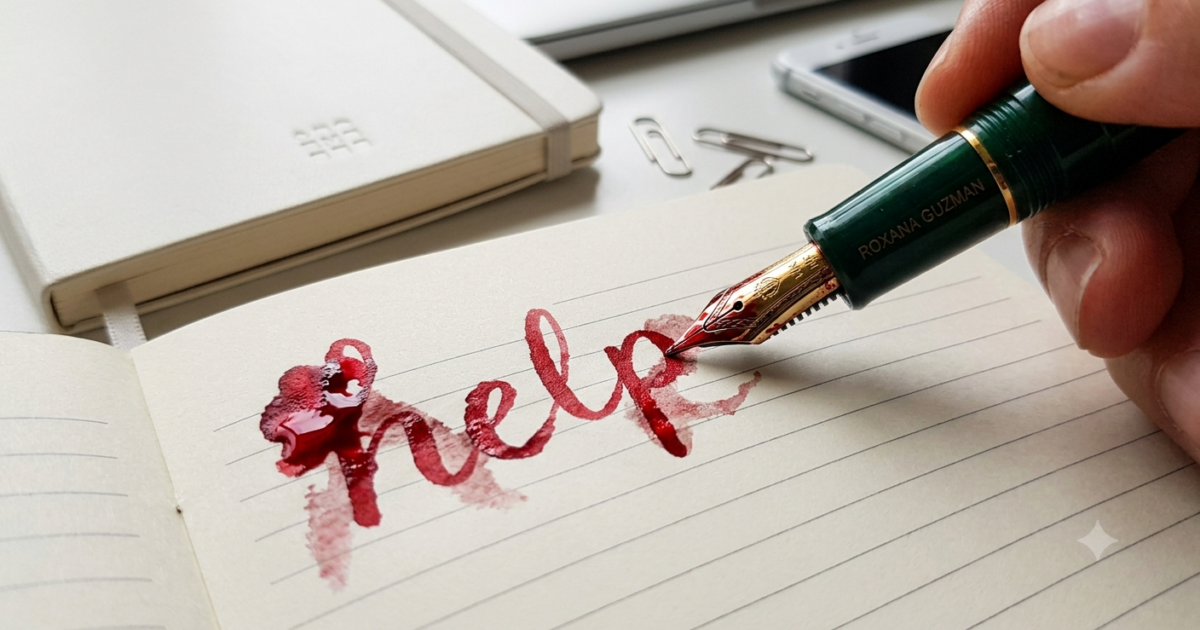
It is a bitter, painful reality that repeats itself time and again in Mexico. Roxana Guzman’s name joins a terrifyingly long list of voices that have been silenced. While the official investigation is still ongoing, society is already pronouncing the verdict: this is the work of a corrupt system that eliminates its own citizens. Roxana was no criminal, her only ‘crime’ was that she refused to look away. Her weapon was her pen, her ammunition was the truth. And in today’s Mexico, the truth is a death sentence.
The story of Roxana Guzman
Roxana Guzman’s story is as gruesome as it is exemplary of the fate of critical thinkers in her country. She was ruthlessly kidnapped, a tried and tested tactic to sow fear and paralyze the rest of society. Days of uncertainty and fear ended in the worst-case scenario: her lifeless body was found. Murdered.
Roxana’s work focused directly on the structures that hold Mexico in their grip. She wrote fearlessly about the widespread corruption, the close ties between local authorities and drug cartels, and the government’s total failure to provide safety to its own citizens. Her criticism struck a raw nerve with those in power. And the fear is immense that the system, instead of listening, has responded with the ultimate act of censorship: her elimination.
Mexico, The Graveyard for Journalism
Unfortunately, Roxana’s murder is not an isolated incident. For years, Mexico has been one of the most dangerous countries in the world for journalists and human rights activists. Freedom of speech in Mexico has turned into Russian roulette. Are you a little too critical? Do you ask the wrong questions of the wrong official? Then you are murdered by the government whose legal duty is to protect you. It is the ultimate form of betrayal of the population.
A World Turned Upside Down
It is completely incomprehensible that a government is suspected of murdering its own inhabitants. A state derives its right to exist from protecting its citizens, guaranteeing human rights, and providing a safe haven. When that same state turns into the prime suspect in a murder, we enter a pitch-black, inverted world. The police, the army, and the politicians are no longer the shields against evil, but its suspected perpetrators. Citizens live in a permanent state of fear, knowing that the hand that should lift them up is the one accused of pulling the trigger.
An Ode to Roxana Guzman
This article is a firm demand for the truth in an ongoing investigation, and above all, an unconditional ode to Roxana Guzman.
Roxana, your voice was stifled in the darkness, but your echo rings louder than ever. You refused to bow to intimidation and refused to sell your pen to lies. You chose the dangerous path of truth, knowing how high the price could be.
They thought that along with your body, they could also bury your ideas and sweep the truth under the rug. They were wrong. Your name now symbolizes the indestructible courage of those who continue to speak when the rest must remain silent. We know your name now. We know your story. The investigation is ongoing, but whatever the outcome, we will never let go of your story. Rest in peace, Roxana. Your struggle was not in vain.
About Dirk Jan Buter
I am a software developer, programmer, and the founder of Yvonta, based in Zwolle, The Netherlands. With a deep passion for low-level systems, custom software architecture, and the evolving intersection of AI and human digital persistence, I spend my time building specialized tools and exploring the technical and philosophical boundaries of digital autonomy.
Writing and publishing are central to my work, but navigating them comes with a unique challenge: I live with dyslexia. To bridge the gap between complex architectural ideas and clear communication, I use AI as an active co-writer and editorial partner. This collaboration allows me to focus fully on the core concepts, logic, and perspective of my writing, ensuring my technical insights and independent editorial projects are shared with clarity and precision.
Frequently Asked Questions
16 questions
Roxana Guzman was a journalist in Mexico whose murder brought her to the author's attention. She was killed by her own government for refusing to ignore corruption and injustice. Her name joins a long list of silenced critical voices in the country.
Roxana was ruthlessly kidnapped, held for days in uncertainty, and then found murdered. Her body was discovered after the kidnapping, confirming the worst fears. This tactic of abduction is used to instill fear in society.
She wrote fearlessly about widespread corruption, the close ties between local authorities and drug cartels, and the government's failure to protect citizens. Her criticism directly challenged the structures of power holding Mexico. This focus made her a target for those in authority.
Her criticism of corruption and cartel ties struck a raw nerve with those in power. Instead of reforms, the system responded with elimination as the ultimate censorship. The article states the government itself has a hand in such crimes.
It is explicitly not an isolated incident but part of a terrifyingly long list of silenced journalists. Dozens are murdered or disappear yearly in similar circumstances. The pattern reflects systemic issues rather than random violence.
Mexico is described as one of the most dangerous countries for journalists, often more so than active war zones. This ranking stems from consistent high fatality rates and targeted killings. The comparison underscores the extreme risks faced by reporters and activists.
Every year dozens of journalists and activists are murdered or disappear without a trace. In almost all cases, perpetrators are never convicted due to impunity. These figures highlight the deliberate strategy behind the lack of justice.
Impunity is portrayed as a deliberate strategy rather than an accident. When the government has involvement in crime, justice cannot prevail. This allows the cycle of killings to continue unchecked.
It has turned into Russian roulette where being too critical or asking the wrong questions can lead to murder. The government, meant to protect, instead eliminates those who challenge it. This inverts the expected protections of a state.
A state derives its right to exist from protecting citizens and guaranteeing human rights, yet Mexico's institutions betray this by acting as executioners. Police, army, and politicians become perpetrators instead of shields. Citizens live in permanent fear of the very authorities supposed to help them.
The idea that threats come only from anonymous dangers in the shadows is challenged. Instead, the article emphasizes murders by the institutions meant to protect citizens. This reveals the inverted reality where the state itself silences critics.
It highlights the close ties between local authorities and drug cartels as a key focus of Roxana's reporting. These connections contribute to the government's failure to ensure safety. The system responds to exposure with violence rather than accountability.
When a government murders its own inhabitants, it enters a pitch-black inverted world where it betrays its foundational purpose. Citizens face betrayal from the hand that should lift them up. This creates an environment where truth-telling becomes a death sentence.
It serves as an ode to Roxana Guzman, honoring her courage and refusal to sell her pen to lies. Her voice, though stifled, echoes louder through continued storytelling. The piece ensures her struggle is remembered as not in vain.
Her murderers thought they could bury her ideas with her body, but they were wrong as her name now symbolizes indestructible courage. As long as her story is told, the oppressors have not won. We now know her name and story, amplifying the truth she fought for.
Readers often search for details on specific victims like Roxana, rates of impunity, and whether the government is complicit. The piece directly addresses why truth-tellers are targeted and how the system perpetuates fear. It also explores the personal cost and lasting impact of such losses.
Generated by AI to give you complete answers about this topic.
* **Services:** AI clones (voice/video), real-time 3D avatar implementation, custom software development, the Yvonta News Platform, and **trade**.
* **Input Data:** Audio, video, or images provided by the client for AI processing.
#### 2. Delivery and acceptance of the service
* **2.1. Best effort:** AI services, the Yvonta News Platform, and trade services are provided on a "best effort" basis. Technical artifacts, minor deviations in likeness, fluctuations in automated content aggregation, or market data latency are inherent to the technology and do not constitute a defect.
* **2.2. Acceptance period:** Custom software and 3D models are deemed accepted if the client does not report specific bugs in writing within 7 days of delivery.
* **2.3. Third-party dependency:** Yvonta frequently utilizes third-party API providers (e.g., AI engines, cloud hosting, news feeds, financial exchange data). Yvonta is not liable for service interruptions, execution failures, or data accuracy issues caused by these third parties.
#### 3. Intellectual property & ethical use
* **3.1. Ownership:** Yvonta retains all rights to its proprietary code, training methods, and base 3D models. The client receives a license for the final result.
* **3.2. Right of likeness:** The client guarantees that they possess the rights to the voice/face being cloned. Yvonta is not obliged to verify these rights but may request proof.
* **3.3. Termination due to misuse:** Yvonta reserves the right to terminate any agreement immediately and without refund if the client uses the services for:
* Generating deepfakes without consent.
* Illegal, hateful, or pornographic content.
* Impersonation for fraudulent purposes.
* Spreading verified misinformation or unauthorized scraping via the News Platform.
* **3.4. Compliance Responsibility:** The Client warrants that their use of the Yvonta News Platform and trade services complies with applicable media laws, financial regulations, copyright regulations, and privacy rules (e.g., GDPR).
#### 4. Liability (The "Shield" clauses)
* **4.1. Financial limit:** Yvonta’s total liability is strictly limited to the amount paid by the Client for the relevant project.
* **4.2. No indirect damages:** Yvonta is in no event liable for loss of profit, loss of data, or consequential damages (e.g., if the Client’s client cancels a contract due to a bug in Yvonta’s software, a failure in the News Platform feed, or financial losses incurred through trade).
* **4.3. Indemnification:** The Client indemnifies Yvonta against all legal costs and damages arising from third-party claims regarding the Input Data, the content published via the News Platform, financial activities conducted via trade, or the Client’s use of the AI output.
* **4.4. Content and Market Disclaimer:** Yvonta acts as the host and provider of the Yvonta News Platform and trade services. The Client is solely responsible for the compliance of published content with local laws and the financial risk associated with trading activities. Yvonta is not liable for damages arising from content accuracy, the legal status of aggregated/generated news, or investment results.
* **4.5. Duty of Human Oversight:** The Client is responsible for maintaining "human-in-the-loop" oversight for all AI-generated content and financial trading parameters before execution or public release. Failure to perform such oversight relieves Yvonta of liability for damages resulting from incorrect information or financial loss.
#### 5. Payments & Maintenance
* **5.1. Payment terms:** Net 14 days from the invoice date, unless stated otherwise.
* **5.2. Suspension:** In the event of overdue payment, Yvonta may remotely block access to the software, the News Platform, trade services, or AI services until the outstanding amount has been paid.
#### 6. Privacy (GDPR)
* **6.1. Biometric data:** The Client acknowledges that AI clones involve the processing of biometric data. The Client is the "Data Controller" and Yvonta is the "Data Processor."
* **6.2. Deletion:** Yvonta deletes the raw input data after completion of the training process, unless agreed otherwise for maintenance purposes.
#### 7. Law and jurisdiction
* **7.1. Governing law:** These terms are governed by Dutch law.
* **7.2. Court:** Any disputes shall be settled exclusively by the competent court in Zwolle, the Netherlands.
Leave a Reply