Why read this: "Steeds meer facturen worden automatisch opgevolgd, maar achter elke openstaande betaling schuilt een menselijk verhaal dat geen systeem kan beoordelen." Agnes Hensen laat zien waarom automatisering tijd bespaart én waar die grenzen heeft: systemen zien geen misgelopen facturen, interne misverstanden of tijdelijke betalingsproblemen. Ontdek hoe je duidelijkheid combineert met klantvriendelijkheid, wanneer een persoonlijk gesprek of maatwerk beter werkt dan strengere standaardberichten, en hoe je technologie inzet zonder het menselijk oordeel te verliezen. Lees dit als je cashflow wilt verbeteren zonder relaties onder druk te zetten , precies de balans die moderne ondernemers nodig hebben.
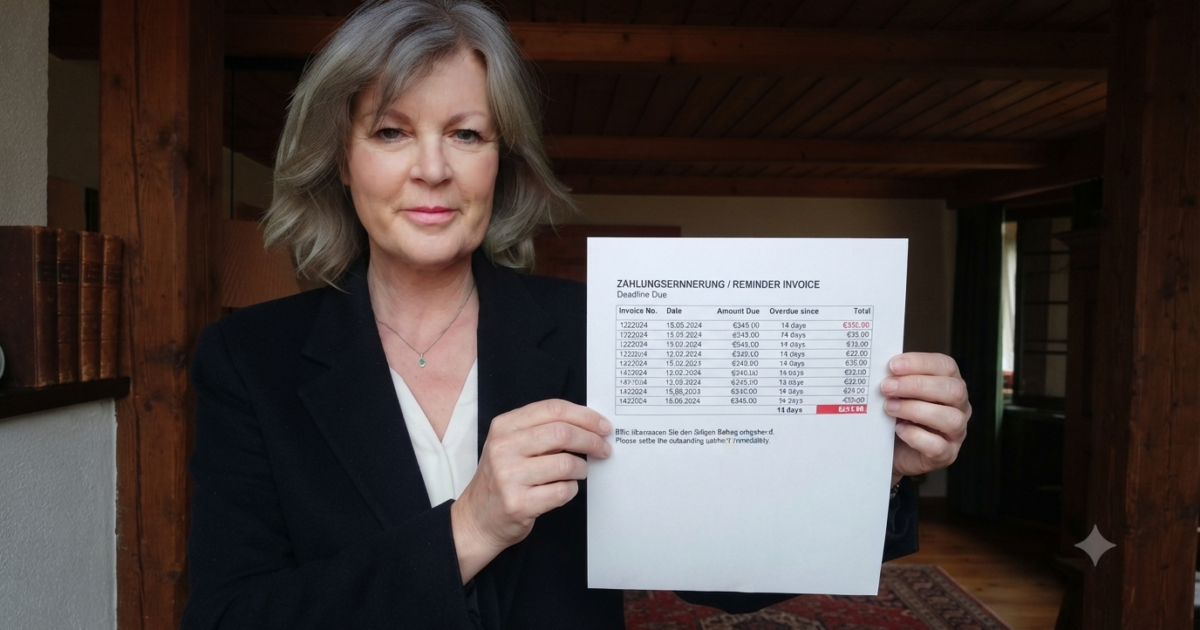
Steeds meer bedrijfsprocessen worden geautomatiseerd. Facturen worden automatisch gegenereerd en verzonden, boekhoudsoftware houdt betaaltermijnen bij en herinneringen kunnen zonder menselijke tussenkomst naar de klant worden gestuurd. Dit bespaart tijd en voorkomt dat openstaande facturen over het hoofd worden gezien.
Maar niet elke situatie kan effectief worden teruggebracht tot een geautomatiseerd bericht dat op een vooraf ingesteld moment wordt verzonden. Achter een openstaande factuur zitten immers mensen, omstandigheden en soms een verhaal dat een systeem niet kan beoordelen.
Daarom blijft persoonlijk inzicht belangrijk bij het opvolgen van een betaling.
Automatisering is nuttig, maar kent zijn grenzen
Een geautomatiseerd systeem is uitstekend in het vaststellen wanneer een betaaltermijn is verstreken. Het kan dan een standaardherinnering sturen en misschien een paar dagen later nog een bericht.
Wat een systeem meestal niet ziet, is de reden voor de vertraagde betaling.
Mogelijk heeft de klant de factuur nooit ontvangen. Misschien denkt de klant dat er iets mis is. Het kan ook zijn dat de factuur intern bij de verkeerde persoon terecht is gekomen, of dat iemand tijdelijk niet in staat is het volledige bedrag te betalen.
In dergelijke gevallen is het sturen van steeds strengere standaardberichten niet altijd de beste aanpak. Soms is een snelle vraag, een persoonlijk telefoontje of een op maat gemaakt voorstel effectiever.
Automatisering kan dus waardevolle ondersteuning bieden zonder het menselijk oordeel volledig te hoeven vervangen.
Duidelijkheid hoeft de klantrelatie niet te schaden
Sommige ondernemers wachten lang voordat ze een factuur opvolgen. Ze willen niet overkomen als onvriendelijk of ongeduldig en zijn voorzichtig met het benaderen van hun klant.
Die terughoudendheid is begrijpelijk, maar meestal onnodig.
Een betalingsherinnering, een telefoontje of zelfs een duidelijke formele aanmaning is een normaal onderdeel van zakendoen. Een factuur vertegenwoordigt werk dat al is verricht, een product dat al is geleverd of een dienst die de klant al heeft gebruikt.
Correct om betaling vragen is daarom niet hetzelfde als de relatie onder spanning zetten. Sterker nog, duidelijkheid kan voorkomen dat frustratie zich opbouwt. Beide partijen weten waar ze aan toe zijn en eventuele misverstanden kunnen sneller worden opgelost.
De manier waarop de boodschap wordt overgebracht maakt echter wel verschil. Een zorgvuldig geformuleerde brief komt anders over dan een dreigend, generiek bericht.
Eerst begrijpen, daarna handelen
Een onbetaalde factuur vereist niet per se dat er meteen een rigoureus incassotraject wordt gestart. Vaak zijn er eerst verschillende opties beschikbaar.
Een vriendelijke betalingsherinnering kan volstaan als een factuur simpelweg over het hoofd is gezien. Als daar geen reactie op komt, kan een e-mail, WhatsApp-bericht of telefoontje meer duidelijkheid geven. Een formele aanmaning kan dan een passende volgende stap zijn.
De verstandigste aanpak hangt af van factoren zoals de klant, het bedrag, eerdere communicatie en of de factuur wordt betwist.
Daarom is het waardevol om niet alleen naar de verstreken betaaltermijn te kijken, maar ook naar de omstandigheden eromheen. Niet elke openstaande factuur vraagt om dezelfde toon of aanpak. Technologie kan aangeven dat actie nodig is, terwijl menselijk inzicht helpt bepalen wat die actie moet zijn.
Persoonlijk toezicht gecombineerd met digitale snelheid
www.briefmailen.nl is ontstaan vanuit het idee dat factuuropvolging eenvoudiger kon, zonder een volledig geautomatiseerd proces.
Ondernemers kunnen de dienst gebruiken om betalingsherinneringen of aanmaningen op te stellen en te versturen. Opties zijn onder meer verzending per post of e-mail, aangevuld met contact via WhatsApp of telefoon.
Elk verzoek wordt persoonlijk beoordeeld. Waar nodig wordt samengewerkt aan de formulering, de aanpak en de juiste volgende stap. Dat betekent niet dat technologie geen rol speelt; digitale hulpmiddelen maken het proces juist sneller en overzichtelijker. Persoonlijk toezicht zorgt ervoor dat het resultaat niet uitsluitend door een standaard systeem wordt bepaald.
Als de betaling ondanks de genomen stappen nog niet is ontvangen, kunnen de beschikbare opties worden besproken. In sommige gevallen is doorverwijzing naar een incassopartner uiteindelijk de juiste zet.
Technologie als hulpmiddel, geen vervanging
De ontwikkeling van AI en automatisering biedt ondernemers veel mogelijkheden. Routinetaken kunnen sneller worden uitgevoerd en informatie kan gemakkelijker worden verwerkt.
Vooral bij gevoelige communicatie blijft het echter belangrijk om niet alleen te kijken naar wat technisch mogelijk is. De vraag is ook wat passend, redelijk en effectief is.
Uiteindelijk is een openstaande factuur niet alleen een regel in een database. Het vertegenwoordigt werk dat door een ondernemer is verricht en betreft een klant die om verschillende redenen nog niet heeft betaald.
De beste oplossing ontstaat daarom vaak uit een combinatie van technologie en de menselijke touch: automatiseren waar mogelijk en persoonlijk beoordelen waar nodig.
Meer informatie over het persoonlijk laten beoordelen en versturen van betalingsherinneringen en aanmaningen is te vinden op www.briefmailen.nl.
About Agnes Hensen
Agnes Hensen is a self-made Dutch entrepreneur and the owner of Hensenbeheer in Schiedam, an independent practice specializing in accounts receivable management and financial administration support primarily tailored for smaller businesses. Valuing personal freedom and career independence over fixed employment, she built her expertise through various administrative and staffing assignments before establishing her home-based office model to streamline client payments, clear out administrative backlogs, and resolve communication gaps with debtors.
Frequently Asked Questions
16 questions
The article argues that while automation of invoice generation and reminders saves time, it cannot fully replace human judgment because unpaid invoices often involve unique personal circumstances, reasons, and relationships that systems cannot assess. Personal insight remains essential for effective and appropriate follow-up. The best approach combines technology for speed with human oversight for context and tone.
Automated systems excel at detecting overdue deadlines and sending standard reminders but fail to identify reasons like non-receipt of the invoice, internal misrouting, disputes, or temporary inability to pay. Sending increasingly strict automated messages in these cases can be ineffective or damaging. Human evaluation helps determine the right next step based on the specific situation.
Examples include the customer never receiving the invoice, believing something is wrong with it, the invoice reaching the wrong internal person, or the customer being temporarily unable to pay the full amount. In these scenarios, standard escalating reminders are not always optimal. A personal call, tailored proposal, or quick question may work better.
Requesting payment clearly is presented as a normal part of business since the invoice represents work already delivered. Timely reminders prevent built-up frustration and allow faster resolution of misunderstandings. The key is the tone: a carefully worded message maintains professionalism better than a generic threatening one.
Many hesitate to follow up because they fear appearing unfriendly or impatient and worry it will strain the customer relationship. The article states this caution is usually unnecessary, as clear communication about payment is standard business practice and does not equate to damaging the relationship.
Start with a friendly payment reminder if the invoice was simply overlooked. If no response, follow with an email, WhatsApp message, or phone call for clarity. A formal reminder can then be the next appropriate step, with the exact approach depending on the customer, amount, prior communication, and whether the invoice is disputed.
The service allows entrepreneurs to draft and send payment reminders or formal notices via post, email, WhatsApp, or phone. Every request receives personal review, and assistance is provided with wording, strategy, and the best next step when needed. Technology speeds up the process while human judgment ensures the outcome is not dictated solely by standard automation.
Referral becomes an option only after previous steps such as reminders and personal contact have been attempted without success. The service discusses available options with the entrepreneur in such cases. It is presented as one possible final measure rather than the immediate response.
Automation handles routine tasks and processes information faster, but it should not replace assessment of what is appropriate, reasonable, and effective in each case. The article emphasizes that an unpaid invoice represents real work performed and a customer with specific reasons for non-payment. The optimal solution combines digital tools with human insight.
A carefully formulated letter or message comes across differently and more positively than a threatening or generic automated notice. The way the message is delivered influences whether it preserves or harms the customer relationship. Personal review helps ensure the tone matches the situation.
Many processes such as invoice creation, deadline tracking, and reminder sending are increasingly automated to save time and avoid oversights. However, the article stresses that not every situation can be reduced to a pre-scheduled automated message because people, circumstances, and stories are involved. Human judgment therefore remains necessary alongside automation.
Factors like the specific customer, invoice amount, history of communication, and whether the invoice is contested should influence the chosen approach and tone. Relying only on the elapsed deadline can lead to inappropriate escalation. Technology can flag the need for action while humans decide what action fits.
Users can send reminders or demands by post or email, supplemented by contact via WhatsApp or telephone. Each request is individually assessed rather than processed through a fully automated pipeline. This hybrid model keeps the process efficient yet personalized.
An open invoice is not merely a database entry but represents work already performed by the entrepreneur and a customer who has not yet paid for various possible reasons. This human element requires more than algorithmic handling. Effective resolution therefore benefits from both speed of technology and personal assessment.
The service was developed from the idea that invoice follow-up could be made simpler without becoming a completely automated process. It aims to provide digital tools for efficiency while ensuring every case receives personal review and tailored handling. The goal is to automate where possible and apply human judgment where necessary.
Automate routine tasks such as deadline tracking and initial reminders to gain speed and overview. Apply personal oversight to evaluate context, choose the right tone, and decide on the most suitable next step. This combination is presented as the most effective way to handle payment follow-up while protecting customer relationships.
Generated by AI to give you complete answers about this topic.
* **Services:** AI clones (voice/video), real-time 3D avatar implementation, custom software development, the Yvonta News Platform, and **trade**.
* **Input Data:** Audio, video, or images provided by the client for AI processing.
#### 2. Delivery and acceptance of the service
* **2.1. Best effort:** AI services, the Yvonta News Platform, and trade services are provided on a "best effort" basis. Technical artifacts, minor deviations in likeness, fluctuations in automated content aggregation, or market data latency are inherent to the technology and do not constitute a defect.
* **2.2. Acceptance period:** Custom software and 3D models are deemed accepted if the client does not report specific bugs in writing within 7 days of delivery.
* **2.3. Third-party dependency:** Yvonta frequently utilizes third-party API providers (e.g., AI engines, cloud hosting, news feeds, financial exchange data). Yvonta is not liable for service interruptions, execution failures, or data accuracy issues caused by these third parties.
#### 3. Intellectual property & ethical use
* **3.1. Ownership:** Yvonta retains all rights to its proprietary code, training methods, and base 3D models. The client receives a license for the final result.
* **3.2. Right of likeness:** The client guarantees that they possess the rights to the voice/face being cloned. Yvonta is not obliged to verify these rights but may request proof.
* **3.3. Termination due to misuse:** Yvonta reserves the right to terminate any agreement immediately and without refund if the client uses the services for:
* Generating deepfakes without consent.
* Illegal, hateful, or pornographic content.
* Impersonation for fraudulent purposes.
* Spreading verified misinformation or unauthorized scraping via the News Platform.
* **3.4. Compliance Responsibility:** The Client warrants that their use of the Yvonta News Platform and trade services complies with applicable media laws, financial regulations, copyright regulations, and privacy rules (e.g., GDPR).
#### 4. Liability (The "Shield" clauses)
* **4.1. Financial limit:** Yvonta’s total liability is strictly limited to the amount paid by the Client for the relevant project.
* **4.2. No indirect damages:** Yvonta is in no event liable for loss of profit, loss of data, or consequential damages (e.g., if the Client’s client cancels a contract due to a bug in Yvonta’s software, a failure in the News Platform feed, or financial losses incurred through trade).
* **4.3. Indemnification:** The Client indemnifies Yvonta against all legal costs and damages arising from third-party claims regarding the Input Data, the content published via the News Platform, financial activities conducted via trade, or the Client’s use of the AI output.
* **4.4. Content and Market Disclaimer:** Yvonta acts as the host and provider of the Yvonta News Platform and trade services. The Client is solely responsible for the compliance of published content with local laws and the financial risk associated with trading activities. Yvonta is not liable for damages arising from content accuracy, the legal status of aggregated/generated news, or investment results.
* **4.5. Duty of Human Oversight:** The Client is responsible for maintaining "human-in-the-loop" oversight for all AI-generated content and financial trading parameters before execution or public release. Failure to perform such oversight relieves Yvonta of liability for damages resulting from incorrect information or financial loss.
#### 5. Payments & Maintenance
* **5.1. Payment terms:** Net 14 days from the invoice date, unless stated otherwise.
* **5.2. Suspension:** In the event of overdue payment, Yvonta may remotely block access to the software, the News Platform, trade services, or AI services until the outstanding amount has been paid.
#### 6. Privacy (GDPR)
* **6.1. Biometric data:** The Client acknowledges that AI clones involve the processing of biometric data. The Client is the "Data Controller" and Yvonta is the "Data Processor."
* **6.2. Deletion:** Yvonta deletes the raw input data after completion of the training process, unless agreed otherwise for maintenance purposes.
#### 7. Law and jurisdiction
* **7.1. Governing law:** These terms are governed by Dutch law.
* **7.2. Court:** Any disputes shall be settled exclusively by the competent court in Zwolle, the Netherlands.

Leave a Reply