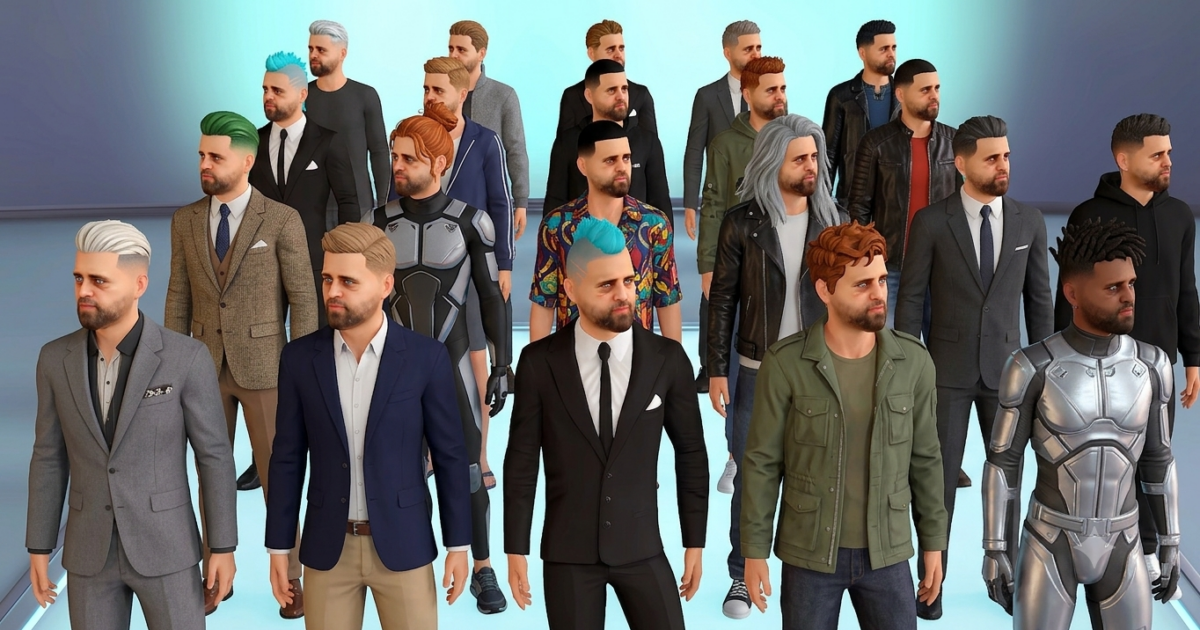
Een mens is geen doorsnee gemiddelde. Toch bakt de doorsnee kunstmatige intelligentie alleen maar een eenheidsworst van gemiddelden, getraind op gigantische hopen collectieve data. Het resultaat? Steriele, voorspelbare antwoorden die klinken alsof ze door iedereen en tegelijk door niemand zijn geschreven.
Bij Yvonta trekken we daar een streep door. AI Persona Cloning is ons tech- en filosofische project om de unieke, compromisloze denkwijze van één specifiek persoon vast te leggen en te kopiëren. Het is de motor achter Yvonta Afterlife, waarmee we een leven lang menselijk nadenken vertalen naar een zelfstandige, digitale entiteit.
Het idee: de nuance vangen
Een AI-kloon is geen simpele chatbot die een paar bekende kreten nadoet. Het is een digitale blauwdruk van hoe een brein werkt, inclusief iemands logica, schrijfstijl en eigen perspectief. Echte individualiteit zit hem nou juist in de details: hoe je een probleem aanpakt, je eigenzinnige “wat als”-kronkels, je vocabulaire en je vaste denkgewoonten.
Ons doel is een systeem te bouwen dat niet zomaar wat tekst spuugt, maar echt redeneert zoals jij dat zou doen.
Weg van de zwarte doos van Big Tech
De meeste moderne AI-tools leunen op logge, zware systemen die in hand zijn van de grote techreuzen. Daarbij moet je al je persoonlijke data inleveren bij externe servers, waardoor je unieke kant als sneeuw voor de zon verdwijnt.
Yvonta pakt AI Persona Cloning heel anders aan:
Zelf opgebouwd: We gebruiken low-level systemen en lokale architecturen zodat we zelf de volledige controle houden over de datastroom, de snelheid en de privacy.
De Unlicense-filosofie: De tools waarmee we menselijk bewustzijn bewaren, moeten van iedereen zijn. Geen corporate poortwachters of vervelende licenties.
Volledige soevereiniteit: Je digitale kloon, je data en je manier van denken blijven honderd procent van jou.
De techniek onder de hood
Hoe giet je iemands persoonlijkheid in code? Dat is een flinke technische puzzel waarbij we losse, ongestructureerde levensdata omzetten in een slim, snel reagerend systeem.
1. Lokale RAG (Retrieval-Augmented Generation): In plaats van een compleet levensverhaal in een log en inefficiënt geheugen te proppen, gebruiken we een slim lokaal RAG-systeem. Het doorzoekt persoonlijke archieven, teksten en notities, en pakt precies de juiste context en herinneringen erbij zodra dat nodig is voor een antwoord.
2. Gedrag en woordgebruik afstemmen: Praten is meer dan alleen de juiste grammaticaregels volgen. Onze systemen analyseren hoe iemand schrijft en praat, zodat de kloon exact dezelfde toon, ritmes en diepgang meekrijgt en niet als een standaard bot klinkt.
3. Realtime actie: Een digitale kloon moet direct en soepel reageren. Door te bouwen op efficiënte C-backends en alles lokaal te laten draaien, minimaliseren we de vertraging. Of het nou om tekst of spraak gaat: het voelt direct en natuurlijk aan.
Een lopend experiment
AI Persona Cloning is geen vaag theorieboekverhaal, maar iets waar we volop mee bezig zijn. Dezelfde technologie vormde de motor achter onze bijdrage aan de documentaireserie AI LOVE, en laat zien hoe de grens tussen software en iemands persoonlijke nalatenschap aan het verschuiven is.
We bouwen geen machines om de mensheid te vervangen. We bouwen de infrastructuur om ervoor te zorgen dat wanneer een scherp brein, een uniek perspectief of een leven vol opgebouwde expertise zijn biologische einde bereikt, de denkwijze erachter gewoon door blijft leven.
Mainstream AI is built on averages from collective data, producing sterile and predictable outputs that sound like everyone and no one. This homogenized approach ignores that a human is not an average. Yvonta rejects this in favor of capturing distinct individual cognitive footprints.
AI Persona Cloning is a technical and philosophical initiative to capture, map, and replicate the distinct cognitive footprint of a specific individual. It serves as the core engine for the Yvonta Afterlife by translating a lifetime of human reasoning into a functional autonomous digital entity. The goal is to create a structural replica of someone's communication style, logic, and perspective rather than generic responses.
An AI-kloon is not a chatbot trained to mimic catchphrases but a structural replica of an individual's reasoning patterns, including nuances like problem evaluation, divergent thinking, unique vocabulary, and cognitive biases. It aims to reason like the person would, not just generate text. This requires capturing deeper elements beyond surface-level imitation.
Real individuality lies in nuances such as specific problem-evaluation methods, divergent 'what if' thinking patterns, unique vocabulary, and cognitive biases. The system is designed to replicate these so the clone reasons authentically rather than producing generic AI behavior. Capturing these details is central to the initiative's philosophy.
Yvonta avoids bloated high-level frameworks controlled by centralized tech giants that require transferring personal data to external servers. Instead, it uses low-level system design and localized architectures for full control over the data pipeline, performance, and privacy. This ensures the clone's individuality is not diluted.
The Unlicense philosophy holds that tools for preserving human consciousness should belong to the public domain, free from corporate gatekeeping and restrictive licenses. It supports building the cloning system without proprietary constraints. This aligns with the goal of absolute sovereignty over one's digital clone and data.
Absolute sovereignty means the user's digital clone, data, and cognitive architecture remain fully under their own control. No external entities dilute or access the personal information. This is achieved through localized architectures that keep everything private and owned by the individual.
The pipeline starts with a Personal Data Vault containing Obsidian Vaults, writings, audio, and repositories. It proceeds through local ingestion and parsing, vector space embedding with BGE-M3, retrieval-augmented generation via local LLMs, and finally produces the AI Persona for authentic low-latency interaction.
Localized RAG uses an optimized local framework to crawl and chunk dense personal text archives into a specialized semantic vector space instead of loading entire life stories into a context window. When prompted, the clone dynamically retrieves exact contexts, memories, and philosophies needed for authentic responses. This makes the system efficient and accurate.
Behavioral and lexical alignment analyzes an individual's specific structural patterns in writing and speaking habits. The clone inherits the correct tone, sentence rhythm, and analytical depth to avoid generic AI output. This ensures the replica matches the person's unique expressive style beyond mere syntax.
Real-time execution relies on efficient C-based backends and local execution to minimize latency between human input and AI response. This enables seamless interaction through text or synthesized speech that feels natural and direct. The focus on localized processing supports low-friction communication.
The Yvonta Afterlife is driven by the AI Persona Cloning technology, which converts a lifetime of human reasoning into a functional autonomous digital entity. It aims to preserve unique perspectives and expertise beyond biological limits. The cloning system forms its operational core.
It is an active, evolving implementation that formed the operational core of Yvonta's contribution to the documentarieserie AI LOVE. This demonstrates the shifting boundary between software architecture and human legacy. The project is not theoretical but already in use.
The goal is to build infrastructure that ensures a brilliant mind or unique perspective continues uninterrupted after reaching its biological limit. It focuses on preserving human reasoning and expertise rather than replacing humanity with machines. This creates lasting digital representations of individual cognition.
The vault incorporates Obsidian Vaults, writings, audio recordings, and code repositories as sources of unstructured life data. These are processed through ingestion and parsing to feed the cloning pipeline. The emphasis is on personal, localized collections.
Localized architectures provide absolute control over the data pipeline, performance, and privacy while preventing dilution of individuality. They avoid reliance on external servers controlled by tech giants. This supports the Unlicense philosophy and user sovereignty.
Generated by AI to give you complete answers about this topic.
Terms and Conditions
### Terms and Conditions
**Last updated: July 17, 2026**
---
#### 1. Definitions
* **Services:** AI clones (voice/video), real-time 3D avatar implementation, custom software development, the Yvonta News Platform, and **trade**.
* **Input Data:** Audio, video, or images provided by the client for AI processing.
#### 2. Delivery and acceptance of the service
* **2.1. Best effort:** AI services, the Yvonta News Platform, and trade services are provided on a "best effort" basis. Technical artifacts, minor deviations in likeness, fluctuations in automated content aggregation, or market data latency are inherent to the technology and do not constitute a defect.
* **2.2. Acceptance period:** Custom software and 3D models are deemed accepted if the client does not report specific bugs in writing within 7 days of delivery.
* **2.3. Third-party dependency:** Yvonta frequently utilizes third-party API providers (e.g., AI engines, cloud hosting, news feeds, financial exchange data). Yvonta is not liable for service interruptions, execution failures, or data accuracy issues caused by these third parties.
#### 3. Intellectual property & ethical use
* **3.1. Ownership:** Yvonta retains all rights to its proprietary code, training methods, and base 3D models. The client receives a license for the final result.
* **3.2. Right of likeness:** The client guarantees that they possess the rights to the voice/face being cloned. Yvonta is not obliged to verify these rights but may request proof.
* **3.3. Termination due to misuse:** Yvonta reserves the right to terminate any agreement immediately and without refund if the client uses the services for:
* Generating deepfakes without consent.
* Illegal, hateful, or pornographic content.
* Impersonation for fraudulent purposes.
* Spreading verified misinformation or unauthorized scraping via the News Platform.
* **3.4. Compliance Responsibility:** The Client warrants that their use of the Yvonta News Platform and trade services complies with applicable media laws, financial regulations, copyright regulations, and privacy rules (e.g., GDPR).
#### 4. Liability (The "Shield" clauses)
* **4.1. Financial limit:** Yvonta’s total liability is strictly limited to the amount paid by the Client for the relevant project.
* **4.2. No indirect damages:** Yvonta is in no event liable for loss of profit, loss of data, or consequential damages (e.g., if the Client’s client cancels a contract due to a bug in Yvonta’s software, a failure in the News Platform feed, or financial losses incurred through trade).
* **4.3. Indemnification:** The Client indemnifies Yvonta against all legal costs and damages arising from third-party claims regarding the Input Data, the content published via the News Platform, financial activities conducted via trade, or the Client’s use of the AI output.
* **4.4. Content and Market Disclaimer:** Yvonta acts as the host and provider of the Yvonta News Platform and trade services. The Client is solely responsible for the compliance of published content with local laws and the financial risk associated with trading activities. Yvonta is not liable for damages arising from content accuracy, the legal status of aggregated/generated news, or investment results.
* **4.5. Duty of Human Oversight:** The Client is responsible for maintaining "human-in-the-loop" oversight for all AI-generated content and financial trading parameters before execution or public release. Failure to perform such oversight relieves Yvonta of liability for damages resulting from incorrect information or financial loss.
#### 5. Payments & Maintenance
* **5.1. Payment terms:** Net 14 days from the invoice date, unless stated otherwise.
* **5.2. Suspension:** In the event of overdue payment, Yvonta may remotely block access to the software, the News Platform, trade services, or AI services until the outstanding amount has been paid.
#### 6. Privacy (GDPR)
* **6.1. Biometric data:** The Client acknowledges that AI clones involve the processing of biometric data. The Client is the "Data Controller" and Yvonta is the "Data Processor."
* **6.2. Deletion:** Yvonta deletes the raw input data after completion of the training process, unless agreed otherwise for maintenance purposes.
#### 7. Law and jurisdiction
* **7.1. Governing law:** These terms are governed by Dutch law.
* **7.2. Court:** Any disputes shall be settled exclusively by the competent court in Zwolle, the Netherlands.