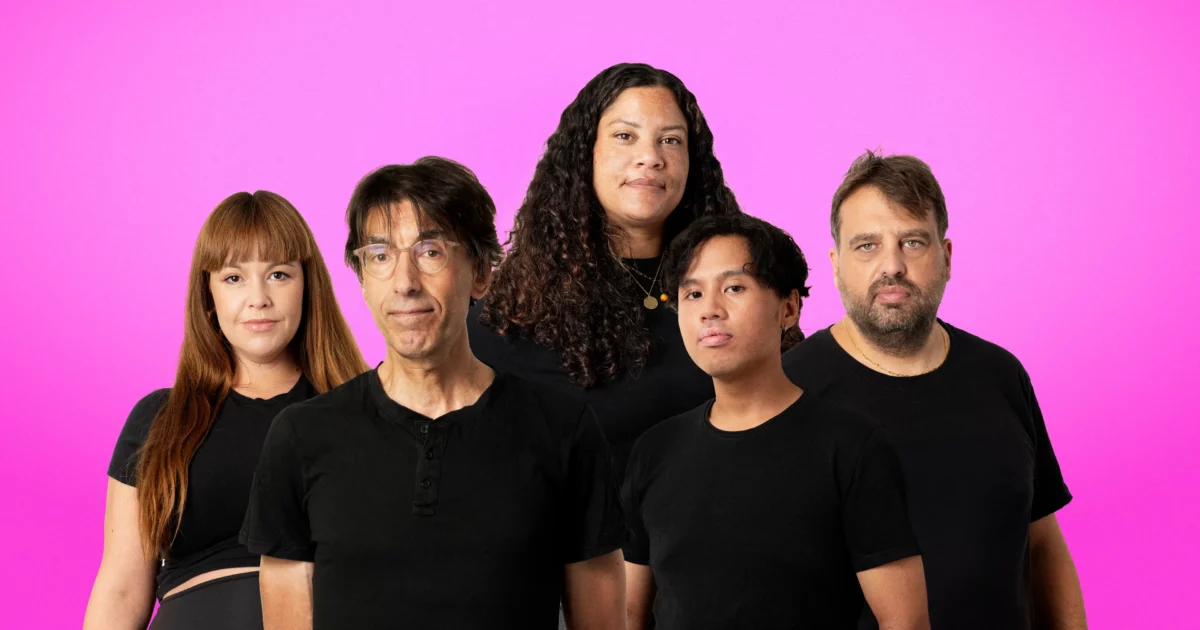
Technologie is nooit neutraal. Het is gewoon een spiegel die laat zien hoe we als maatschappij naar jezelf kijken. Toen de makers van de docuserie AI LOVE aanklopten, zag ik meteen een kans: eindelijk het gesprek over AI weghalen bij die droge efficiëntie en muffe sciencefiction-clichés. In de serie zie je mij als systeemarchitect en denker die bezig is met het digitaal bewaren van menselijke herinneringen en kennis.
Bij Yvonta bouwen we systemen die de essentie van iemands persoonlijkheid kunnen vangen. Niet om menselijk contact te vervangen, maar om een brug te slaan naar de toekomst, een soort digitaal hiernamaals. AI LOVE maakte dat abstracte, technische verhaal ineens heel tastbaar voor iedereen.
Schuren tussen verstand en gevoel
Wat de docu ijzersterk laat zien, is precies het punt waar harde software botst met rauwe emotie. Aan de ene kant heb je de keiharde logica: vanaf de grond code, data en algoritmes opbouwen om iemands manier van denken en praten te vangen. Aan de andere kant raakt dit werk direct aan onze grootste kwetsbaarheden: dat we tijdelijk zijn, en dat we wanhopig graag verbonden willen blijven met de mensen van wie we houden.
Zo’n AI-kloon maken is dan ook veel meer dan een technische puzzel. Het is een ethische en filosofische zoektocht. Want hoe vang je de fijne nuances van hoe iemand denkt in een digitaal systeem, zonder dat de ‘ziel’ eruit vliegt?
Anders kijken naar wat je achterlaat
Mijn meewerken aan AI LOVE was geen eindstation, maar een aanjager om ons denken op te schudden. We moeten echt af van die standaard systemen die Big Tech ons voorschrijft. Wat je digitaal achterlaat zou een recht moeten zijn: een manier om nabestaanden steun te bieden en om waardevolle menselijke kennis te beschermen tegen het vergeten.
De serie liet zien dat wat wij achter de schermen bouwen, de manier waarop we rouwen, herinneren en communiceren compleet kan veranderen. Het blijft een experiment in uitvoering, en de documentaire geeft daar een eerlijk en ongefilterd kijkje in.
The article states that technology is never neutral and acts as a mirror reflecting how society views itself. It uses this idea to shift discussions about AI away from efficiency and sci-fi clichés toward preserving human memory and expertise through digital conservation.
The author is presented as a system architect and thinker who directs the preservation of human memory and expertise via digital conservation. This role highlights their work at Yvonta in building systems that carry the essence of a personality.
Yvonta aims to create systems that carry the essence of a personality to build a bridge to the future, described as a digital afterlife. The purpose is not to replace human connection but to enable continuity with loved ones after death.
The series made the abstract and technical process of digital personality preservation tangible for a broader audience. It provided an honest, unfiltered view of the ongoing experiment in AI-driven remembrance.
It captures the precise intersection where rigid code, data structures, and algorithms collide with raw human emotions such as mortality and the need for continuity. This tension turns AI persona cloning into both a technical and deeply personal challenge.
It is framed as an ethical and philosophical exploration of capturing the nuances of human reasoning in a digital framework without losing inherent character. The work directly confronts vulnerabilities around death and legacy.
Digital heritage should be seen as a right and a form of restorative value for those left behind, rather than following centralized big-tech architectures. It also serves to protect accumulated human expertise from erosion over time.
The systems have the potential to fundamentally alter how people mourn, remember, and communicate with the deceased. This represents an ongoing experiment that challenges current social perspectives on death and memory.
It served as a catalyst to challenge prevailing views on AI and digital systems. The involvement aimed to push society beyond standard centralized architectures toward more human-centered digital preservation.
No numerical data or statistics are provided in the article. It focuses instead on philosophical, ethical, and societal implications of the technology.
Centralized architectures dictated by big tech are contrasted with a more rights-based, restorative model that protects personal expertise and continuity. The author's approach emphasizes ethical depth over purely commercial efficiency.
It counters the idea that AI development is limited to sterile efficiency or science-fiction tropes. Instead, it emphasizes the emotional, ethical, and memory-preserving dimensions of the technology.
The process involves starting from scratch to build code, data structures, and algorithms that map patterns of thinking and speaking. This mapping must preserve the inherent character of the individual being cloned.
AI persona development is directly linked to confronting human mortality and the desire for continuity with loved ones. It positions digital conservation as a response to these deep emotional needs.
The author views it as an ongoing experiment that requires challenging existing perspectives and expanding beyond big-tech models. The focus remains on ethical preservation of human essence rather than replacement of relationships.
The series targets a broader public to make technical digital-conservation processes understandable and relatable. It aims to spark wider conversations about AI's role in memory, grief, and legacy.
Generated by AI to give you complete answers about this topic.
Terms and Conditions
### Terms and Conditions
**Last updated: July 17, 2026**
---
#### 1. Definitions
* **Services:** AI clones (voice/video), real-time 3D avatar implementation, custom software development, the Yvonta News Platform, and **trade**.
* **Input Data:** Audio, video, or images provided by the client for AI processing.
#### 2. Delivery and acceptance of the service
* **2.1. Best effort:** AI services, the Yvonta News Platform, and trade services are provided on a "best effort" basis. Technical artifacts, minor deviations in likeness, fluctuations in automated content aggregation, or market data latency are inherent to the technology and do not constitute a defect.
* **2.2. Acceptance period:** Custom software and 3D models are deemed accepted if the client does not report specific bugs in writing within 7 days of delivery.
* **2.3. Third-party dependency:** Yvonta frequently utilizes third-party API providers (e.g., AI engines, cloud hosting, news feeds, financial exchange data). Yvonta is not liable for service interruptions, execution failures, or data accuracy issues caused by these third parties.
#### 3. Intellectual property & ethical use
* **3.1. Ownership:** Yvonta retains all rights to its proprietary code, training methods, and base 3D models. The client receives a license for the final result.
* **3.2. Right of likeness:** The client guarantees that they possess the rights to the voice/face being cloned. Yvonta is not obliged to verify these rights but may request proof.
* **3.3. Termination due to misuse:** Yvonta reserves the right to terminate any agreement immediately and without refund if the client uses the services for:
* Generating deepfakes without consent.
* Illegal, hateful, or pornographic content.
* Impersonation for fraudulent purposes.
* Spreading verified misinformation or unauthorized scraping via the News Platform.
* **3.4. Compliance Responsibility:** The Client warrants that their use of the Yvonta News Platform and trade services complies with applicable media laws, financial regulations, copyright regulations, and privacy rules (e.g., GDPR).
#### 4. Liability (The "Shield" clauses)
* **4.1. Financial limit:** Yvonta’s total liability is strictly limited to the amount paid by the Client for the relevant project.
* **4.2. No indirect damages:** Yvonta is in no event liable for loss of profit, loss of data, or consequential damages (e.g., if the Client’s client cancels a contract due to a bug in Yvonta’s software, a failure in the News Platform feed, or financial losses incurred through trade).
* **4.3. Indemnification:** The Client indemnifies Yvonta against all legal costs and damages arising from third-party claims regarding the Input Data, the content published via the News Platform, financial activities conducted via trade, or the Client’s use of the AI output.
* **4.4. Content and Market Disclaimer:** Yvonta acts as the host and provider of the Yvonta News Platform and trade services. The Client is solely responsible for the compliance of published content with local laws and the financial risk associated with trading activities. Yvonta is not liable for damages arising from content accuracy, the legal status of aggregated/generated news, or investment results.
* **4.5. Duty of Human Oversight:** The Client is responsible for maintaining "human-in-the-loop" oversight for all AI-generated content and financial trading parameters before execution or public release. Failure to perform such oversight relieves Yvonta of liability for damages resulting from incorrect information or financial loss.
#### 5. Payments & Maintenance
* **5.1. Payment terms:** Net 14 days from the invoice date, unless stated otherwise.
* **5.2. Suspension:** In the event of overdue payment, Yvonta may remotely block access to the software, the News Platform, trade services, or AI services until the outstanding amount has been paid.
#### 6. Privacy (GDPR)
* **6.1. Biometric data:** The Client acknowledges that AI clones involve the processing of biometric data. The Client is the "Data Controller" and Yvonta is the "Data Processor."
* **6.2. Deletion:** Yvonta deletes the raw input data after completion of the training process, unless agreed otherwise for maintenance purposes.
#### 7. Law and jurisdiction
* **7.1. Governing law:** These terms are governed by Dutch law.
* **7.2. Court:** Any disputes shall be settled exclusively by the competent court in Zwolle, the Netherlands.