Distinguished guests, members of the judiciary, and policymakers,
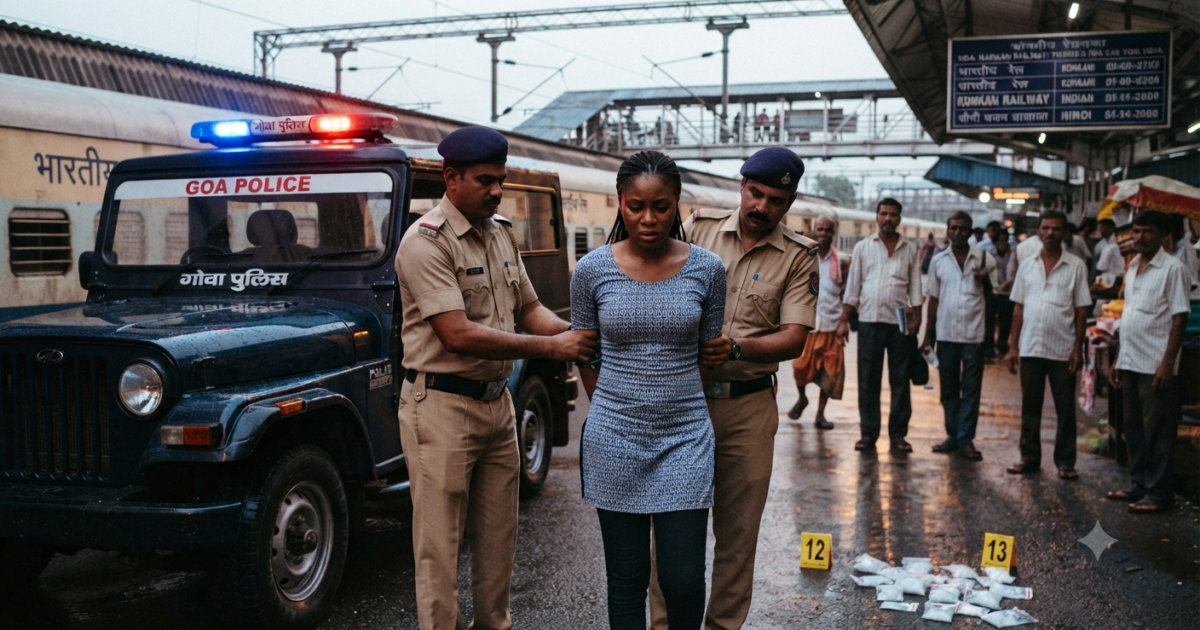
Look closely at the tragedy that unfolded on the platform of Madgaon Railway Station. A young Nigerian woman was intercepted by authorities, her life instantly shattered after she was found carrying 215 grams of cocaine. Under the merciless mechanisms of India’s Narcotic Drugs and Psychotropic Substances Act of 1985, this individual is no longer viewed as a human being, but is instead instantly reduced to a dangerous cartel operative. She now faces up to twenty years of her youth locked away in the bleak cells of Colvale Jail. Yet, we must confront the uncomfortable reality of who we have actually captured here. We have not dismantled a powerful drug syndicate, nor have we stopped the shadowy masterminds who control this multi-billion dollar trade from their luxury villas. Instead, we have trapped a desperate pawn, someone who almost certainly accepted this immense risk out of extreme poverty, systemic vulnerability, or brutal coercion. This anonymous woman in Goa stands as living, breathing proof that our current legal framework does not cure the disease of drug trafficking; it simply crushes the weakest links while the real perpetrators celebrate their profits.
If severe punishments truly delivered a drug-free society, the NDPS Act would have solved India’s narcotics problem decades ago. Instead, after forty years of intensifying penalties and stripping away basic legal protections, illicit substances are cheaper, purer, and more accessible than ever before. This emotionless law refuses to ask why this woman was on that train or whether she had a starving family back home, choosing instead to focus entirely on the weight of the contraband in her possession. By forcing courts to deny bail prior to trial and shifting the burden of proof onto the accused, the system has created a conveyor belt of human suffering where vulnerable couriers are locked away for decades. This approach inflicts a massive financial burden on the state, as taxpayers are forced to foot the enormous bill for endless police investigations, clogged courtrooms, and the long-term incarceration of low-level offenders who pose no true threat to national security. It is a catastrophic waste of public resources feeding an ideological war that cannot be won, but across the globe, visionary nations have already proven that replacing vengeance with reason can heal both a society and its economy.
At the turn of the century, Portugal faced a devastating public health crisis with skyrocketing addiction and infection rates, yet they chose a path of radical compassion by decriminalizing the possession of all drugs for personal use. Instead of funneling resources into overcrowded prisons, they shifted the responsibility from the police to committees of psychologists, social workers, and legal experts who treat substance abuse as a medical condition rather than a crime. This shift from fear to healthcare triggered a dramatic drop in drug-related deaths and a historic decline in street crime, proving that public funds are vastly more effective when spent on rehabilitation rather than incarceration. Similarly, Canada recognized that the only way to destroy the violent criminal syndicates was to take over the market entirely, which they achieved by fully legalizing and regulating cannabis. By assuming control of production, testing, and distribution, the Canadian government eliminated toxic additives from the streets and redirected billions of dollars away from organized crime and directly into the national treasury.
By legalizing and regulating the narcotics trade, we can replicate this economic miracle and completely transform the financial landscape of tourism-driven states like Goa. Instead of allowing hundreds of crores of rupees to flow unregulated into the shadow economy, funding police corruption, beach-belt violence, and underground syndicates, a legalized market would allow the state to capture this wealth through strict taxation and licensing fees. This massive influx of new revenue could be legally funneled directly back into the public sector to build world-class medical facilities, modernize public infrastructure, and fund robust, honest educational campaigns about substance abuse. Furthermore, establishing a transparent, state-supervised market would elevate the safety and global reputation of our hospitality sector, ensuring that international travelers are protected from lethal, contaminated street drugs while completely defunding the criminal networks that currently exploit our coastlines.
The arrest of this Nigerian woman at Madgaon Station is not a victory for public safety, but a somber reminder of a broken system that destroys human lives and drains public funds to maintain a mere illusion of control. If Portugal can rescue its public health through empathy and Canada can dismantle street gangs while enriching its public treasury through strict regulation, India must stop clinging to a destructive and outdated strategy. We must summon the political courage to abolish the NDPS Act, strip the cartels of their power through legal regulation, and build a society that prioritizes fiscal intelligence, public safety, and genuine human dignity over state-sponsored cruelty.
Frequently Asked Questions
16 questions
A young Nigerian woman was arrested carrying 215 grams of cocaine and now faces up to 20 years in Colvale Jail under the NDPS Act. The article portrays her as a vulnerable courier likely driven by poverty or coercion rather than a cartel leader. This case illustrates how the law targets low-level offenders instead of major traffickers.
India’s Narcotic Drugs and Psychotropic Substances Act of 1985 sets harsh mandatory sentences, including up to 20 years in prison for drug offenses based on quantity. It denies bail before trial and shifts the burden of proof onto the accused. The article argues these provisions create a system that crushes vulnerable individuals while failing to stop the drug trade.
She was caught with a relatively small amount of cocaine and is described as desperate, possibly coerced or impoverished. The piece notes that real masterminds operate from luxury villas and remain untouched. This highlights how the law captures weak links instead of dismantling powerful networks.
No; after 40 years of stricter penalties, illicit substances have become cheaper, purer, and more accessible. The law is said to focus only on the weight of contraband rather than addressing root causes like poverty. This outcome shows that severe punishment alone does not create a drug-free society.
Courts must deny bail before trial and the burden of proof is shifted to the accused, creating a pipeline of long-term incarceration for low-level offenders. These rules prevent consideration of personal circumstances such as coercion or family needs. The result is described as a conveyor belt of human suffering funded by taxpayers.
Public funds cover expensive police investigations, overcrowded courts, and decades-long imprisonment of minor couriers who pose little threat. The article calls this a wasteful use of resources that sustains an unwinnable war on drugs. It contrasts this with more effective spending on rehabilitation seen elsewhere.
Portugal decriminalized personal possession of all drugs and shifted cases to panels of psychologists and social workers treating addiction as a health issue. This led to sharp drops in drug-related deaths, infections, and street crime. Resources moved from prisons to healthcare, improving both public health and safety.
Canada legalized and regulated cannabis production, testing, and sales, removing the market from criminal control. This eliminated toxic street products and redirected billions from syndicates into the national treasury. The article suggests similar regulation could work for other substances in India.
A taxed and licensed market would capture hundreds of crores now lost to the shadow economy and reduce police corruption. Revenue could fund hospitals, infrastructure, and education campaigns. Tourism would also improve by removing contaminated street drugs that harm visitors.
State-supervised production and distribution would eliminate lethal additives found in unregulated drugs. This protects tourists while cutting funding to violent coastal syndicates. The article argues it would enhance Goa’s global reputation as a safe destination.
It calls for abolishing the NDPS Act, replacing prohibition with strict regulation, and treating addiction as a health matter. This approach would strip cartels of power and redirect funds to public services. The goal is fiscal responsibility combined with human dignity rather than continued cruelty.
Many assume severe sentences will eliminate drug trafficking, yet the piece shows drugs have only become more available after 40 years of escalation. Punishment targets the poor and coerced while leaving powerful operators untouched. Real solutions require addressing demand through health and regulation instead.
India relies on punishment and incarceration that wastes resources and fails to reduce supply. Portugal and Canada shifted to health-focused decriminalization and regulated markets, cutting deaths, crime, and criminal profits. These examples are presented as evidence that compassion and regulation outperform prohibition.
Extreme poverty, systemic vulnerability, and coercion are cited as reasons desperate individuals accept high-risk smuggling. The law ignores these factors and focuses solely on drug weight. This leads to unjust long sentences for people who are not the true organizers of trafficking.
Clogged courts, police corruption, beach violence, and underground economies fueled by unregulated profits are listed as ongoing harms. These issues drain public resources and damage tourism-driven regions like Goa. Legal regulation is proposed to redirect those funds productively.
Dramatic reductions in drug-related deaths, historic declines in street crime, and successful treatment of addiction as a medical condition rather than a crime. Resources previously used for policing were redirected to social services with measurable public-health gains. These results are offered as a model India could follow.
Generated by AI to give you complete answers about this topic.
* **Services:** AI clones (voice/video), real-time 3D avatar implementation, custom software development, the Yvonta News Platform, and **trade**.
* **Input Data:** Audio, video, or images provided by the client for AI processing.
#### 2. Delivery and acceptance of the service
* **2.1. Best effort:** AI services, the Yvonta News Platform, and trade services are provided on a "best effort" basis. Technical artifacts, minor deviations in likeness, fluctuations in automated content aggregation, or market data latency are inherent to the technology and do not constitute a defect.
* **2.2. Acceptance period:** Custom software and 3D models are deemed accepted if the client does not report specific bugs in writing within 7 days of delivery.
* **2.3. Third-party dependency:** Yvonta frequently utilizes third-party API providers (e.g., AI engines, cloud hosting, news feeds, financial exchange data). Yvonta is not liable for service interruptions, execution failures, or data accuracy issues caused by these third parties.
#### 3. Intellectual property & ethical use
* **3.1. Ownership:** Yvonta retains all rights to its proprietary code, training methods, and base 3D models. The client receives a license for the final result.
* **3.2. Right of likeness:** The client guarantees that they possess the rights to the voice/face being cloned. Yvonta is not obliged to verify these rights but may request proof.
* **3.3. Termination due to misuse:** Yvonta reserves the right to terminate any agreement immediately and without refund if the client uses the services for:
* Generating deepfakes without consent.
* Illegal, hateful, or pornographic content.
* Impersonation for fraudulent purposes.
* Spreading verified misinformation or unauthorized scraping via the News Platform.
* **3.4. Compliance Responsibility:** The Client warrants that their use of the Yvonta News Platform and trade services complies with applicable media laws, financial regulations, copyright regulations, and privacy rules (e.g., GDPR).
#### 4. Liability (The "Shield" clauses)
* **4.1. Financial limit:** Yvonta’s total liability is strictly limited to the amount paid by the Client for the relevant project.
* **4.2. No indirect damages:** Yvonta is in no event liable for loss of profit, loss of data, or consequential damages (e.g., if the Client’s client cancels a contract due to a bug in Yvonta’s software, a failure in the News Platform feed, or financial losses incurred through trade).
* **4.3. Indemnification:** The Client indemnifies Yvonta against all legal costs and damages arising from third-party claims regarding the Input Data, the content published via the News Platform, financial activities conducted via trade, or the Client’s use of the AI output.
* **4.4. Content and Market Disclaimer:** Yvonta acts as the host and provider of the Yvonta News Platform and trade services. The Client is solely responsible for the compliance of published content with local laws and the financial risk associated with trading activities. Yvonta is not liable for damages arising from content accuracy, the legal status of aggregated/generated news, or investment results.
* **4.5. Duty of Human Oversight:** The Client is responsible for maintaining "human-in-the-loop" oversight for all AI-generated content and financial trading parameters before execution or public release. Failure to perform such oversight relieves Yvonta of liability for damages resulting from incorrect information or financial loss.
#### 5. Payments & Maintenance
* **5.1. Payment terms:** Net 14 days from the invoice date, unless stated otherwise.
* **5.2. Suspension:** In the event of overdue payment, Yvonta may remotely block access to the software, the News Platform, trade services, or AI services until the outstanding amount has been paid.
#### 6. Privacy (GDPR)
* **6.1. Biometric data:** The Client acknowledges that AI clones involve the processing of biometric data. The Client is the "Data Controller" and Yvonta is the "Data Processor."
* **6.2. Deletion:** Yvonta deletes the raw input data after completion of the training process, unless agreed otherwise for maintenance purposes.
#### 7. Law and jurisdiction
* **7.1. Governing law:** These terms are governed by Dutch law.
* **7.2. Court:** Any disputes shall be settled exclusively by the competent court in Zwolle, the Netherlands.
Leave a Reply