We all walk through the same world. But sometimes I wonder if we’re actually watching the same movie.
When you look at a traffic light, you see a red light: “I need to stop.” That’s the interface. That’s what everyone sees. When I look at that same traffic light, I see a logic loop. I see a system of timing, sensors in the road surface, and a central server deciding when traffic should flow and when it should come to a halt.
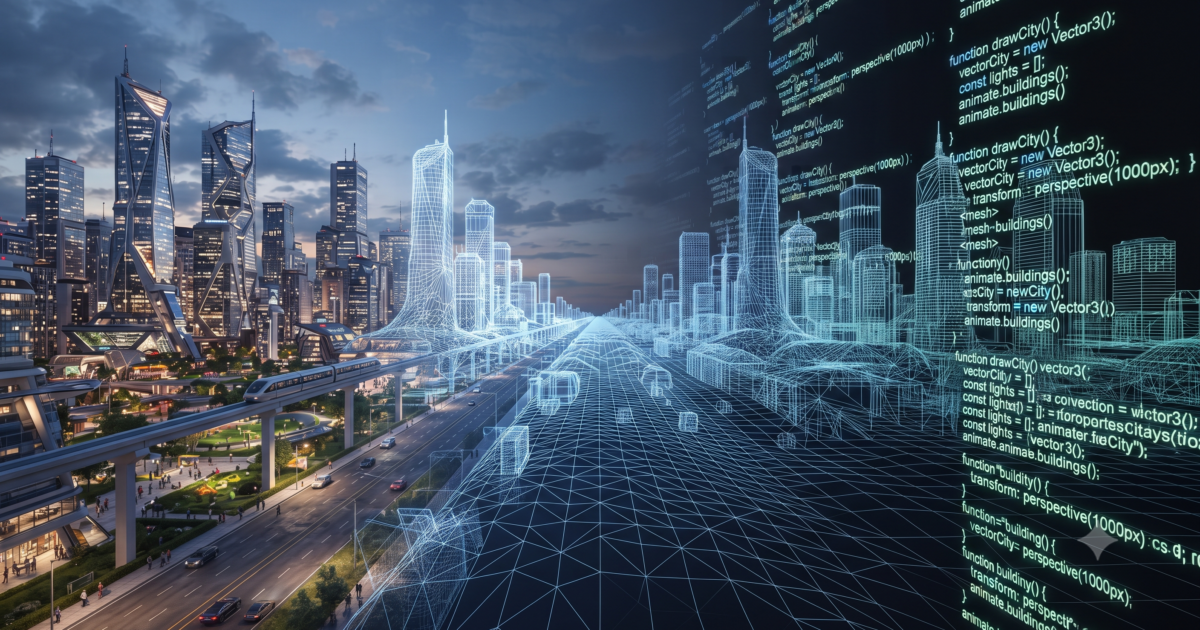
You experience the world, I see how the world is programmed.
Why I see this (and how my dyslexia helped)
Back in school, I was the boy who got stuck on textbooks. To me, words were unmanageable blocks of text. I constantly had to devise workarounds to understand what was written. That was frustrating, but it was also a form of training. Because I couldn’t follow the “normal” path of text and language, I learned to look at the structure behind the words.
I learned to spot patterns. I learned that a sentence isn’t just a collection of letters, but a logical building block. When I started programming later on, it felt like coming home. Finally, there was a language that actually made sense. Since then, I’ve viewed everything in life as a system built on rules, just like a computer program.
The “shades of gray” in society
Imagine society is a beautifully designed app. Most people are delighted by the lovely colors, the user-friendly buttons, and the pleasing layout. But I see the errors in the code.
Take the traffic jam example: You’re stuck in traffic, annoyed by the congestion. You see a line of cars. I see an inefficient algorithm. I see the whole system grinding to a halt because we all want to be in the same place at the same time, whereas a simple tweak to the logic, such as staggering times, would make the entire process run more smoothly.
Take social dramas, for instance: you see two people arguing and feel the emotion. I see a ‘loop’ they can’t break out of. I see two people talking past each other, stuck in an action-reaction pattern because their internal ‘software’ isn’t compatible.
The burden of transparency
There is a downside to all this. Once you see how the world’s source code works, you can’t unsee it. It’s like knowing the secret behind a magic trick: the magic is gone, but you see exactly how it’s done. That can feel lonely at times. You want to warn people, “Watch out, this system is about to crash!”, but those around you are too busy admiring the beautiful interface. They don’t realize that what they call “bad luck” or “coincidence” is actually the predictable outcome of a poorly written program.
Look behind the controls
I’m not writing this because I think I’m better than everyone else. Quite the opposite. I’m writing this because I believe everyone benefits from a little insight into the “source code.”
You don’t have to be a programmer to see that the world isn’t made up of random coincidences. The next time something frustrates you, whether at work, in traffic, or in your relationships, try looking past the controls. Instead of asking, “What is happening here?”, ask yourself, “What is the logic causing this result?”
If we all spent a little less time looking at the interface and a little more time looking at the logic governing our lives, the world would seem a lot less mysterious. And perhaps, just perhaps, we can then improve the code a little bit together.
Frequently Asked Questions
16 questions
Most people see a red light signaling to stop, which is the user interface. The author sees a logic loop involving timing, road sensors, and a central server deciding traffic flow. This illustrates the core difference between experiencing the world and understanding its underlying programming.
Dyslexia made reading textbooks difficult, forcing the author to create workarounds and focus on patterns rather than linear text. This trained the author to spot logical structures behind words instead of following normal language paths. Later, programming felt natural as it aligned with this pattern-recognition skill.
Society is compared to a beautifully designed app where most people enjoy the colors, buttons, and layout. The author focuses on errors in the underlying code that cause inefficiencies. This highlights how everyday frustrations stem from flawed logic rather than random events.
The author views congestion not as a line of cars but as an inefficient algorithm where everyone wants to be in the same place simultaneously. A simple logic tweak like staggering times could resolve it. This shows how systemic rules produce predictable outcomes.
Two people arguing are seen as stuck in an action-reaction pattern due to incompatible internal software. They talk past each other without breaking the cycle. The author contrasts this with the emotional experience most people have.
Once visible, the underlying logic cannot be unseen, removing the magic from everyday events like a spoiled magic trick. This can lead to loneliness when warning others about impending system crashes goes unheeded. People around them remain focused on the interface instead.
Readers are encouraged to look past the interface and examine the logic causing results when frustrated at work, in traffic, or relationships. Instead of asking what is happening, question the underlying rules. This collective insight could help improve the code together.
The interface is what everyone experiences, such as a red light or emotional arguments. The source code refers to the hidden rules, algorithms, and logic loops governing outcomes. Understanding this shift turns perceived coincidences into predictable programming results.
After struggling with words as unmanageable blocks, programming provided a language based on logical structures that made sense. It matched the pattern-spotting skills developed due to dyslexia. This reinforced viewing all life systems as rule-based programs.
The author clarifies they are not claiming superiority but believe insight benefits everyone. The writing aims to share the value of seeing logic rather than to criticize others. This counters any impression of elitism from spotting code errors.
By asking what logic causes a result instead of merely observing what is happening. Spending less time on the interface and more on governing rules makes the world less mysterious. This approach could lead to collaborative code improvements.
It refers to complex social systems viewed as an app with visible errors in code rather than just surface beauty. Examples include traffic inefficiencies and incompatible personal loops. The term captures the layered, rule-driven nature behind apparent chaos.
It creates a burden similar to knowing a magic trick's secret, eliminating wonder but revealing mechanics. Attempts to warn others often fail as they admire the interface. This leads to isolation when predictable bad outcomes are dismissed as luck.
The author argues that what people call bad luck or coincidence results from poorly written programs. Randomness is actually the predictable output of flawed logic in systems like traffic or relationships. Insight into this can demystify life events.
A sentence is described as a logical building block rather than just letters, similar to code structures. This insight came from dyslexia-forced pattern recognition. It formed the foundation for seeing all life aspects as rule-based systems.
Spend more time examining the logic behind frustrating situations instead of the surface interface. Apply this in work, traffic, and relationships to identify rule changes. Collective effort could then refine societal programming.
Generated by AI to give you complete answers about this topic.
* **Services:** AI clones (voice/video), real-time 3D avatar implementation, custom software development, the Yvonta News Platform, and **trade**.
* **Input Data:** Audio, video, or images provided by the client for AI processing.
#### 2. Delivery and acceptance of the service
* **2.1. Best effort:** AI services, the Yvonta News Platform, and trade services are provided on a "best effort" basis. Technical artifacts, minor deviations in likeness, fluctuations in automated content aggregation, or market data latency are inherent to the technology and do not constitute a defect.
* **2.2. Acceptance period:** Custom software and 3D models are deemed accepted if the client does not report specific bugs in writing within 7 days of delivery.
* **2.3. Third-party dependency:** Yvonta frequently utilizes third-party API providers (e.g., AI engines, cloud hosting, news feeds, financial exchange data). Yvonta is not liable for service interruptions, execution failures, or data accuracy issues caused by these third parties.
#### 3. Intellectual property & ethical use
* **3.1. Ownership:** Yvonta retains all rights to its proprietary code, training methods, and base 3D models. The client receives a license for the final result.
* **3.2. Right of likeness:** The client guarantees that they possess the rights to the voice/face being cloned. Yvonta is not obliged to verify these rights but may request proof.
* **3.3. Termination due to misuse:** Yvonta reserves the right to terminate any agreement immediately and without refund if the client uses the services for:
* Generating deepfakes without consent.
* Illegal, hateful, or pornographic content.
* Impersonation for fraudulent purposes.
* Spreading verified misinformation or unauthorized scraping via the News Platform.
* **3.4. Compliance Responsibility:** The Client warrants that their use of the Yvonta News Platform and trade services complies with applicable media laws, financial regulations, copyright regulations, and privacy rules (e.g., GDPR).
#### 4. Liability (The "Shield" clauses)
* **4.1. Financial limit:** Yvonta’s total liability is strictly limited to the amount paid by the Client for the relevant project.
* **4.2. No indirect damages:** Yvonta is in no event liable for loss of profit, loss of data, or consequential damages (e.g., if the Client’s client cancels a contract due to a bug in Yvonta’s software, a failure in the News Platform feed, or financial losses incurred through trade).
* **4.3. Indemnification:** The Client indemnifies Yvonta against all legal costs and damages arising from third-party claims regarding the Input Data, the content published via the News Platform, financial activities conducted via trade, or the Client’s use of the AI output.
* **4.4. Content and Market Disclaimer:** Yvonta acts as the host and provider of the Yvonta News Platform and trade services. The Client is solely responsible for the compliance of published content with local laws and the financial risk associated with trading activities. Yvonta is not liable for damages arising from content accuracy, the legal status of aggregated/generated news, or investment results.
* **4.5. Duty of Human Oversight:** The Client is responsible for maintaining "human-in-the-loop" oversight for all AI-generated content and financial trading parameters before execution or public release. Failure to perform such oversight relieves Yvonta of liability for damages resulting from incorrect information or financial loss.
#### 5. Payments & Maintenance
* **5.1. Payment terms:** Net 14 days from the invoice date, unless stated otherwise.
* **5.2. Suspension:** In the event of overdue payment, Yvonta may remotely block access to the software, the News Platform, trade services, or AI services until the outstanding amount has been paid.
#### 6. Privacy (GDPR)
* **6.1. Biometric data:** The Client acknowledges that AI clones involve the processing of biometric data. The Client is the "Data Controller" and Yvonta is the "Data Processor."
* **6.2. Deletion:** Yvonta deletes the raw input data after completion of the training process, unless agreed otherwise for maintenance purposes.
#### 7. Law and jurisdiction
* **7.1. Governing law:** These terms are governed by Dutch law.
* **7.2. Court:** Any disputes shall be settled exclusively by the competent court in Zwolle, the Netherlands.
Leave a Reply