Written by Dirk Jan Buter

Improving the lives of people with disabilities

Improving the lives of people with disabilities

Written by Dirk Jan Buter on March 26, 2024. Photo by Public Health Image Library (PHIL).

Dicky, my great-aunt I was named after (my nickname is Dick), was confined to a wheelchair most of her life. At the age of 18, she was diagnosed with polio. As a child, we, together with my parents, visited her regularly. She lived in De Ark, a residential facility for children and adults with severe polio paralysis. It was built in 1958, right next to the Zuiderziekenhuis (hospital), after a polio epidemic shook Rotterdam (Netherlands).

Impact on Others

She depended on others for everything. What she could still do was operate her electric wheelchair, and she could also write small pieces. Talking went on between gasps and took a lot of patience. She wrote with her right hand, with a ballpoint pen between index and middle finger. She always sent postcards to everyone. Birthday cards, Christmas cards, or just any card. She was involved, very social, and a listening ear for many people. People around her often came to her for advice.

Three-Year Struggle in an Iron Lung

At the beginning of her illness, she lay in a mega tube, a mechanical ventilator called an iron lung, for three years. Imagine lying still for three years in such a large cylinder! You can’t even scratch your nose if you’re itchy, let alone go to the toilet.

Later, a ventilator replaced the iron lung, using compressed air. That compressed air came through the wall to De Ark from the large compressor in the adjacent hospital. She used compressed air cylinders until modern ventilators powered by electricity became available. It could also work with a car battery so she could go on a foreign holiday once. That one foreign holiday was a risky undertaking, which also included nursing. She had the time of her life in France, as far as that was possible, of course.

Memories of Inspiration

I always admired her, as she was strong and had a zest for life despite her severe disability. As a child, I dreamed of making her life better so that she could walk again or that she would receive aids that would make her life easier. Of course, that was not realistic, also because, as a child, I could do little, which made me angry with a feeling of powerlessness. Talking about these memories with family members makes me realize what an inspiration she has been to me.

A Glimpse of Hope

Fortunately, technological developments continue, and I hope that we will not need wheelchairs anymore. That there will be no more sick people. Until then, we can make these people’s lives more pleasant with aids or help with the search for a possible cure. Whether through prosthetic limbs, adapted treatments, or assistive devices, technology has opened up opportunities for people with disabilities to live more independently. One of the most exciting developments is artificial intelligence and biotechnology.

Promising Developments

An example of this is using biotechnology to create personalized treatments and therapies tailored to the individual needs of people with disabilities. Also, I see great potential for artificial intelligence in diagnosis and treatment to use automated diagnosis. So that it not only provides more accuracy but also a speed gain. Artificial intelligence can also help develop targeted, tailor-made therapies.

A Better Life

I am sure many more solutions can contribute to a better life for people with disabilities. Ultimately, it is to heal people. That no one has to get sick anymore.

Missed Chance

Thanks to administering vaccinations, polio has been significantly reduced to the number of yearly cases. Dicky had just missed that chance because before she got sick, they vaccinated children already. It wasn't her turn yet because she was a little older. She had a lot of bad luck and unfortunate circumstances, which no one could do anything about. Vaccinations have already prevented a lot of suffering in the world. Nowadays, parents are increasingly choosing not to have their children vaccinated. Now you probably understand why this is worrying.

Technology for Lasting Change

As technologies evolve, it is impossible to predict the full extent of the opportunities they will provide for people with disabilities. However, they will undoubtedly have a significant impact in the future. To ensure no one ever has to go through experiences like Dicky’s again.
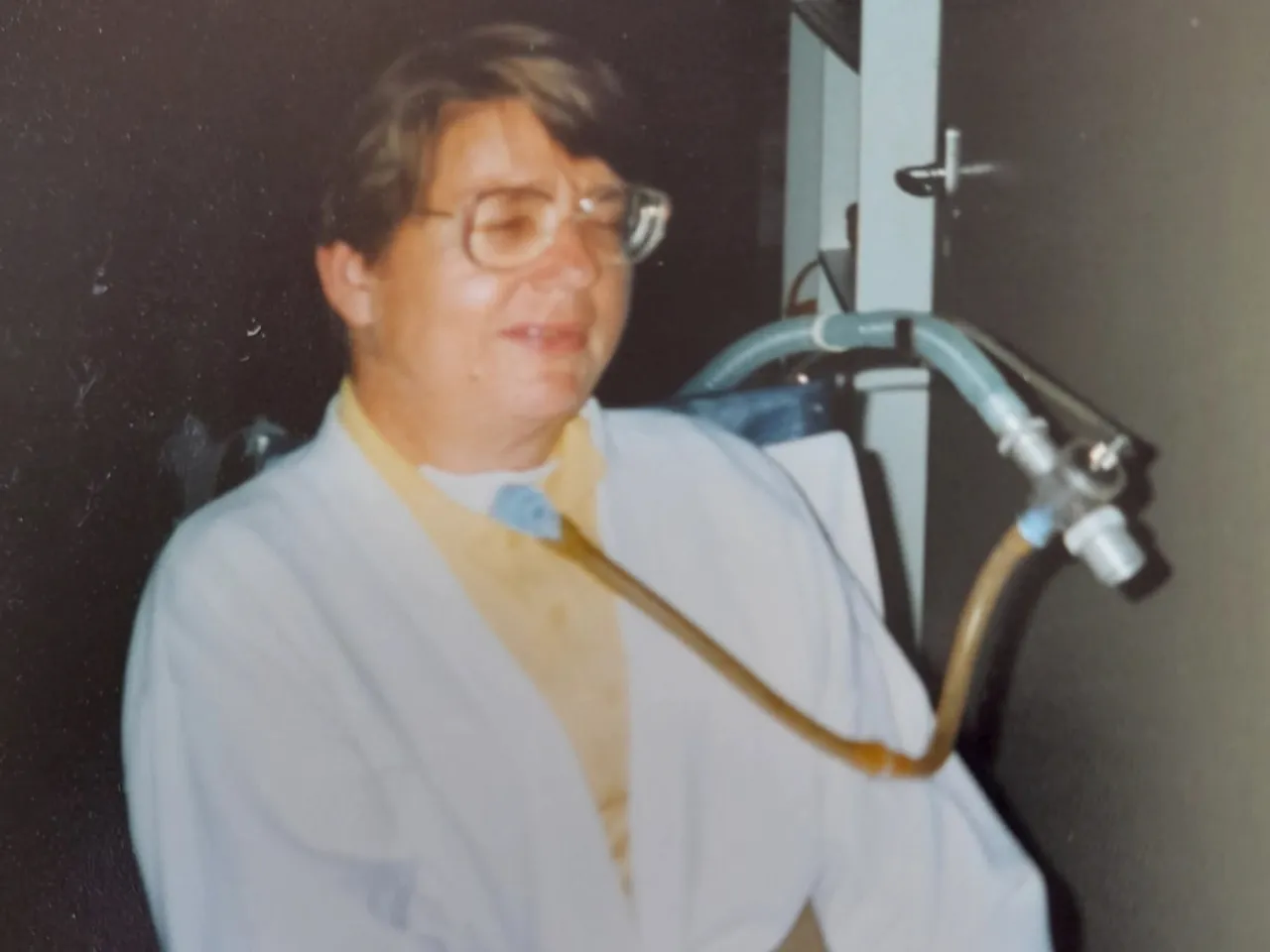
Photo of Dicky

Photo of DickyFamiliearchief

Digital Self-Defense Before It’s Too Late

Less than a decade ago, cybercriminals were often easy to spot. Phishing emails were riddled with spelling errors, fake websites looked amateurish, and fraudulent phone calls were usually transparent attempts to swindle people out of money. Those days are gone. Thanks to artificial intelligence, criminals now have access to the same advanced technology used by major corporations and governments. Consequently, digital self-defense has become more important than ever. AI is transforming the world at breakneck speed. We use intelligent systems to write text, create images, develop software, and solve complex problems. In hospitals, AI assists doctors with diagnoses, companies automate their customer service, and scientists use the technology to develop new medicines. The possibilities seem...

The mind machine: Exploring ai and consciousness

Ever wondered if machines could think and feel like us? Welcome to the futuristic world of artificial intelligence (AI). Scientists are exploring if machines can have their own “mind” and understand the world as we do. This article dives into how AI could someday act like humans and what that means for us. Our brains are pretty amazing. They remember things and help us connect different ideas, like linking a song to a happy memory. This ability, called associative memory, helps us make decisions based on past experiences. *Imagine if AI could do the same, remember things and use those memories to solve problems!* ## What Makes Us Conscious? Consciousness is what makes us aware of our surroundings and ourselves. One cool theory suggests that consciousness comes from how different par...

The Treasures of India

India, the name of a vast, expansive country that owes its name to the Indus River, which actually means ‘stream’ or ‘river’. It is a country stretching from the Himalayas in the north to the deepest tropical south. It is the land of many temples and a collection of philosophies, traditions, rituals, and spiritual movements that constitute Hinduism. India has experienced many dark times and has often fallen victim to foreign rulers, such as the Indo-Greek and Central Asian tribes in antiquity, the Huns in the 5th and 6th centuries, and the Mughal Empire (1526–1857). Subsequently, Europeans, including the Dutch, Portuguese, Spanish, Great Britain, and France, came to dominate India through the slave trade. They introduced the idea of ​​racial segregation: if you had d...

Living forever: The critical view of cryonics

What is the truth behind the cryonics prejudices? Because I notice in my environment that people are too quick to judge. Why are they dismissive of it and are these gut feelings correct? In this article we look for the opposing views and the truth behind these concerns. ## Motivation Cryonics for me is extending my life beyond the limits of what is possible with current techniques. *I think life is way too short and I don't want it to end*. Other than living healthily, there are not many options other than relying on a well-researched experiment called cryonics. I therefore registered with the Cryonics Institute in Michigan in the United States. ## Procedure *At the Cryonics Institute, after your death, your body is kept frozen and cooled with liquid nitrogen* at a temperature...

DNA testing kits: Access to genetic information for everyone

DNA, the building block of our lives, is an amazing molecule that contains unique information about us. *Understanding our DNA can give us valuable insights about our health, hereditary traits and even our ancestry*. Traditional methods of analyzing DNA were lengthy and expensive, but with the advent of next-generation sequencing, home DNA testing kits and biohacking kits, understanding and dealing with our own DNA is more accessible than ever. In this article we will discuss the impact of these technologies and how they have changed our understanding of our own DNA. ### Next-generation sequencing: a revolution in DNA analysis Traditional DNA sequencing methods were time-consuming and expensive, and were mainly used in scientific laboratories. But with the advent of next-generation s...

Real democracy: Voting on issues instead of people

Democracy is an excellent means of giving a country direction and taking different interests into account. When I first heard about this topic as a kid, I thought, “Wow, that's amazing!” But I also had my doubts. Why can you only vote for a person and not a subject? This could be so much better! ## Nasty political games I get a bad feeling when I hear the word politics. Don't get me wrong: the topic is super important! Too often I see abuse and wrong and personal interests taking precedence. I see through these dirty political games and it makes me sick. ## Back to the Essence This year I learned about direct democracy from Switzerland, which made me think about this topic again! These thoughts brought back the old ideas from my childhood, which were good thoughts after all...